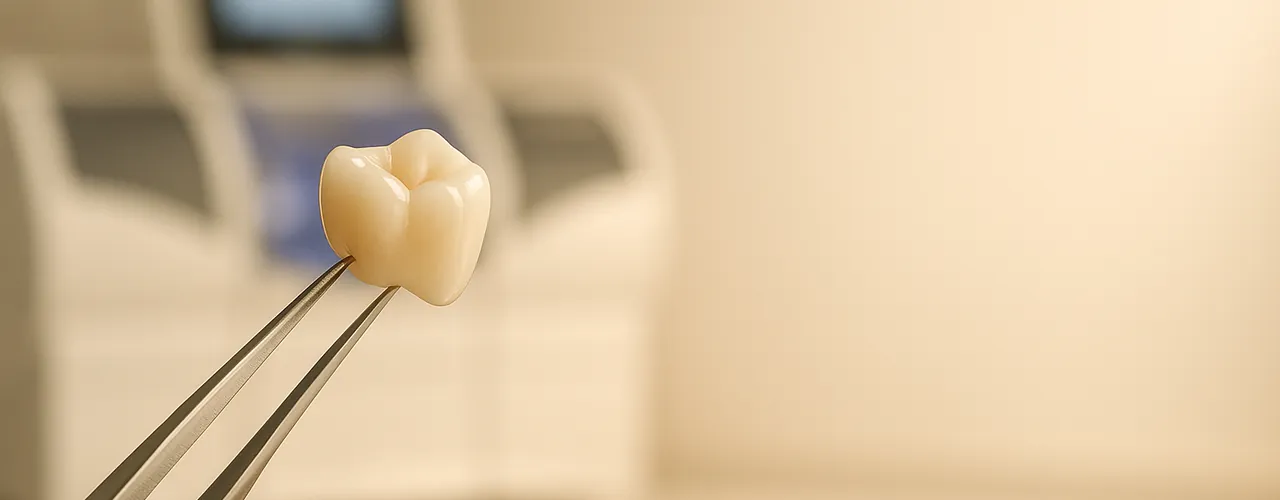
The crown is the workhorse of dental restoration — it rebuilds a tooth that's too broken, decayed or root-canaled to hold a filling. It's also one of the most common reasons patients walk across the border to Los Algodones, because a crown that costs $1,200–$1,800 in the United States is a few hundred dollars here. This guide explains 2026 crown prices, the materials worth knowing, when a "same-day" crown is realistic, and how to make sure cheap doesn't mean low quality.
How much does a dental crown cost in Los Algodones?
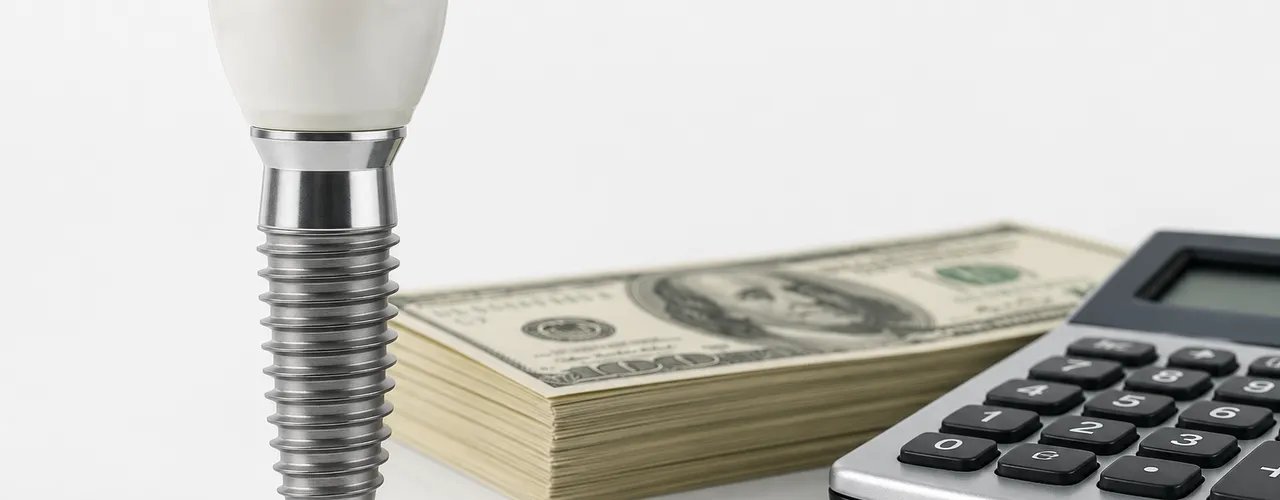
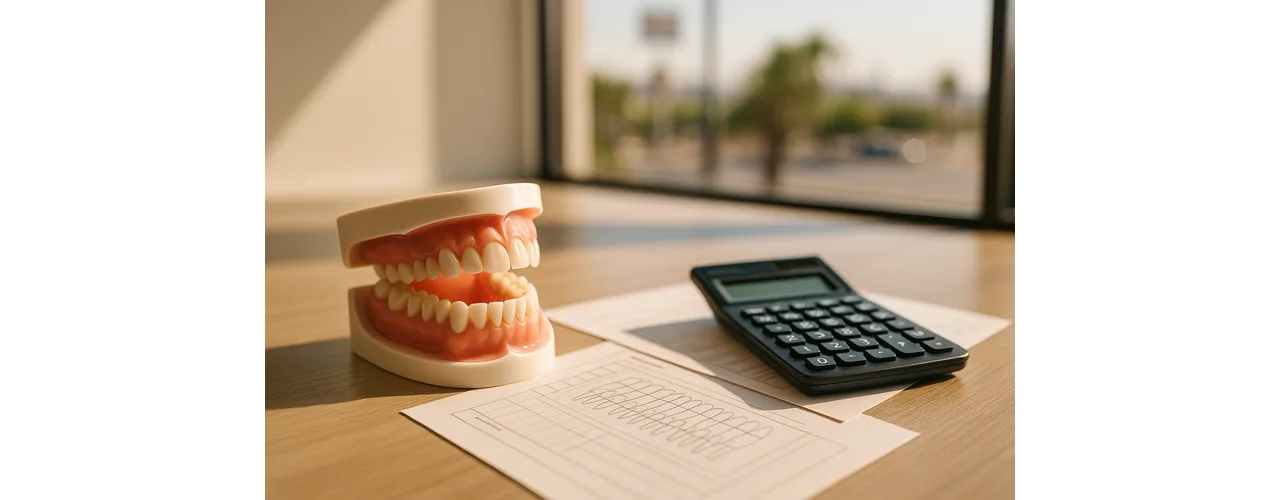
In 2026, plan on roughly $250–$450 per crown in Los Algodones, depending on the material — versus $1,200–$1,800 in the U.S. That 70%-or-so saving is why many patients crown several teeth in a single trip.
| Crown type | U.S. typical | Los Algodones (est.) |
|---|---|---|
| Porcelain-fused-to-metal (PFM) | $1,000–$1,500 | $200–$350 |
| Full porcelain / E-max | $1,300–$1,800 | $300–$450 |
| Zirconia (monolithic) | $1,400–$2,000 | $300–$500 |
For how crowns compare with every other treatment, see the full Los Algodones price list versus the U.S.
Which crown material is right for you?
- Zirconia — extremely strong and a great choice for back molars and people who grind. Modern layered zirconia also looks good up front.
- E-max (lithium disilicate) — the most lifelike for front teeth, with excellent translucency; strong enough for most situations though not quite zirconia-tough.
- PFM — the older porcelain-over-metal standard; affordable and durable, but can show a dark line at the gum over time.
A good dentist matches material to the tooth: zirconia where force is high, E-max where appearance matters most. If a tooth is missing rather than damaged, you need an implant with a crown on top, not a crown alone.
Are same-day crowns really possible?
Yes — and it's a genuine Los Algodones advantage. Many clinics run on-site labs, and some offer CAD/CAM "same-visit" crowns milled while you wait. That said, lab-fabricated crowns (especially layered E-max for front teeth) can look more natural, so the best clinics will tell you honestly when waiting a day for the lab is worth it. For a single back molar, same-day is often perfect; for a visible front tooth, a lab crown may give a better match.
How a crown visit works on a border trip
A conventional crown takes two steps: prepare and scan the tooth, fit a temporary, then bond the final crown once the lab finishes. In Los Algodones this is frequently compressed into a single multi-day stay, or even one day with an on-site lab. Because you can walk across from Yuma, Arizona, splitting it into two short visits is also painless compared with overseas destinations.
How long do crowns last, and how do you care for them?
A well-fitted crown typically lasts 10–15 years and frequently much longer. The crown material doesn't decay, but the tooth and gumline around it can, so the seal between crown and tooth — the margin — is where success or failure is decided. That makes the fit and the lab work more important than the country it was made in. Care is refreshingly ordinary: brush twice a day, floss around the crown daily, and keep your routine cleanings. If you grind your teeth, a nightguard protects both the crown and the opposing teeth. The most common reason a crown fails early isn't the porcelain — it's new decay sneaking in under a poorly sealed margin, which is exactly why choosing a careful clinic matters more than chasing the lowest sticker price.
Crown, filling or onlay — what does your tooth actually need?
Not every damaged tooth needs a full crown. A small cavity is best treated with a simple filling. When more of the tooth is lost but it isn't fully compromised, an onlay (a partial, lab-made restoration) can preserve more natural structure than a crown. A full crown is the right answer when a tooth is heavily filled, cracked, severely worn, or has had a root canal and needs complete protection. A trustworthy dentist recommends the most conservative option that will actually last — be cautious of any clinic that crowns teeth that only need a filling. If a tooth is missing rather than damaged, the conversation shifts to implants instead.
Making sure cheap isn't low quality
- Ask which material and brand of crown you're getting, and why it suits your tooth.
- For front teeth, ask whether a lab crown would look better than same-day.
- Confirm the guarantee and what's covered if the crown fails after you return home.
- Check the clinic on our free Los Algodones clinic ranking and read recent reviews.
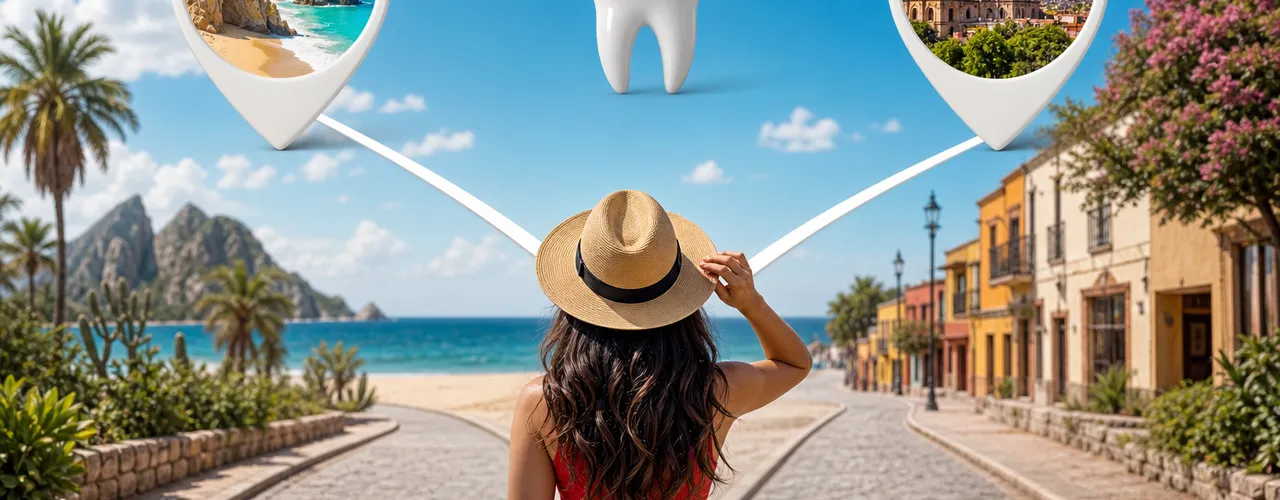
Choosing between destinations? Our Los Algodones vs Tijuana comparison weighs walk-across convenience against big-city specialists.
Frequently asked questions
How much is a dental crown in Los Algodones?
Roughly $250–$450 in 2026 depending on material, compared with $1,200–$1,800 in the U.S. — a saving of about 70%.
Which is better, zirconia or E-max crowns?
Zirconia is stronger and ideal for molars and grinders; E-max is more translucent and usually looks best on front teeth. The right choice depends on the tooth's position and your bite.
Can I get a crown in one day in Los Algodones?
Often yes, thanks to on-site and CAD/CAM labs — especially for back teeth. For a highly visible front tooth, a lab-made crown may give a more natural result, so allow an extra day if your dentist recommends it.
Do crowns from Mexico last as long as U.S. crowns?
A quality zirconia or E-max crown from a good clinic should last just as long — materials are the same worldwide. Longevity depends on fit, your bite and home care, not the border.
Will my crown match my other teeth?
A skilled dentist and lab match shade and shape closely. For front teeth, ask for a try-in or a lab crown so you can approve the match before it's bonded.
Will my dental insurance reimburse a crown done in Mexico?
Some U.S. PPO plans reimburse a portion of treatment received abroad if you submit an itemized receipt and the procedure codes. Ask your Los Algodones clinic for a detailed invoice, keep all paperwork, and check your plan's out-of-network rules before you travel.
Frequently Asked Questions
What are the most common materials for dental crowns in Los Algodones?
Can I get a same-day crown in Los Algodones?
How much does a dental crown cost in Los Algodones in 2026?
Which crown material is best for a molar?
How do I choose a reliable clinic for crowns in Los Algodones?
Questions this page answers
- how much is a dental crown in Los Algodones
- zirconia vs e-max crowns cost Mexico
- same day crowns Los Algodones
- best material for dental crown in Mexico
- PFM crown price Los Algodones
- dental crown cost Los Algodones 2026
- Los Algodones dentist for crowns
- is it safe to get a crown in Mexico
- dental tourism Los Algodones crowns
- how long do crowns last in Mexico