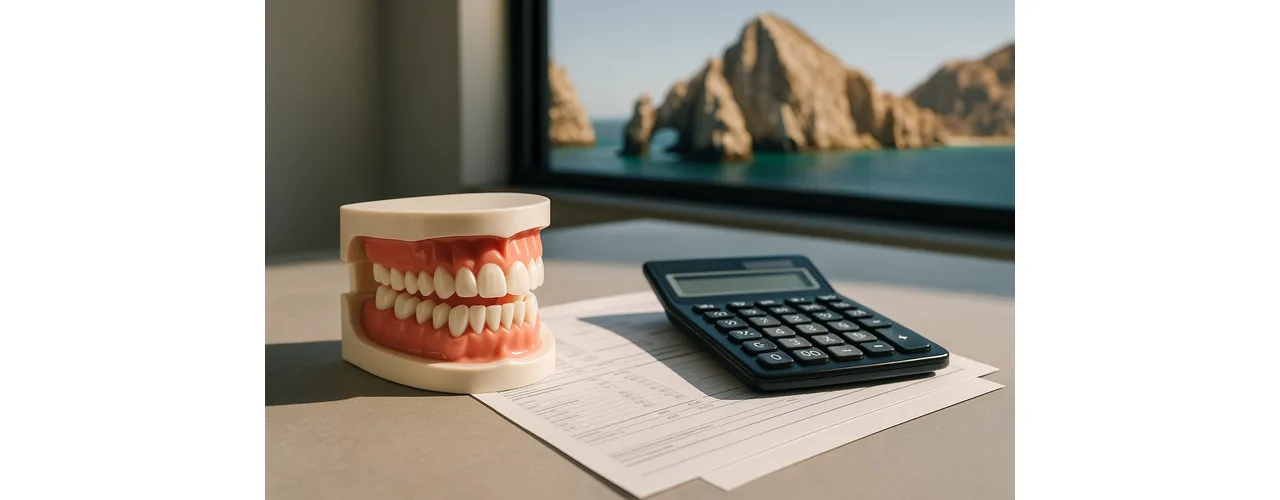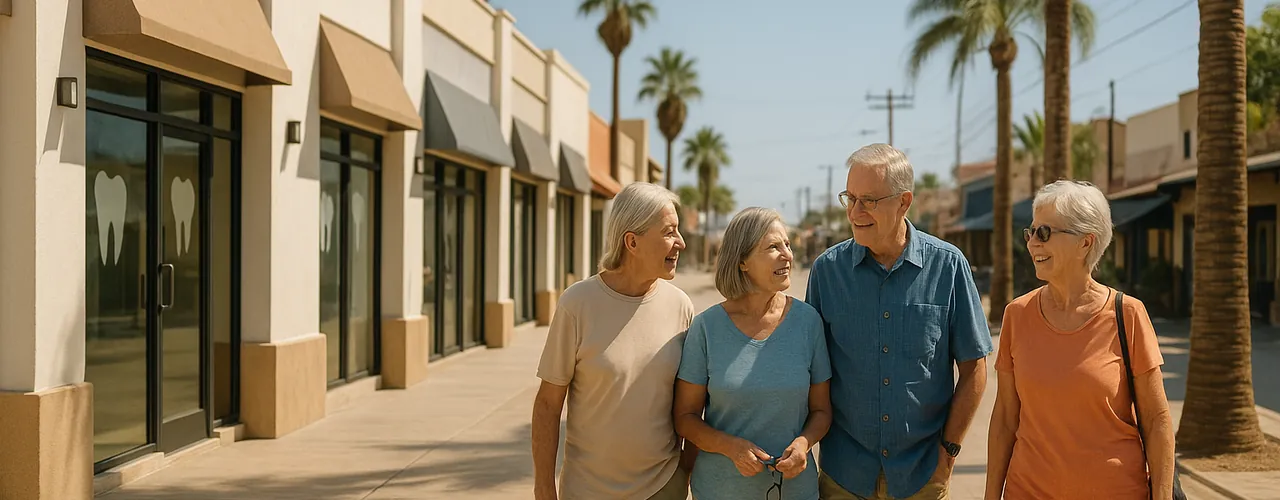
Tucked into a few sun-baked blocks of Baja California, a ten-minute walk from Yuma, Arizona, sits the most concentrated cluster of dental clinics on the planet. Locals and patients call it "Molar City." More than 350 dental practices serve a town of only a few thousand residents — a density no other place on earth comes close to. So how did this tiny border town become the dental capital of the world, and what does that mean for you as a patient? Here are twelve honest reasons, along with the trade-offs worth knowing before you go.
The numbers that make Los Algodones unique
Most dental destinations are big cities where clinics are scattered across miles of traffic. Los Algodones is the opposite: hundreds of dentists, optical shops and pharmacies packed into a grid you can cross on foot in fifteen minutes. That single fact — extreme density — is what drives almost every advantage below. When 350 clinics compete for the same walk-in patient, prices fall, quality stays sharp, and you can compare three or four practices in a single afternoon without ever starting a car.
12 reasons clinics — and patients — thrive here
1. It is genuinely walkable
You park on the U.S. side in Yuma, walk across the Andrade–Algodones crossing, and the clinics begin within a block. No Mexican car insurance, no long drives, no unfamiliar highways.
2. It sits right on the U.S. border
For patients across Arizona, Southern California and Nevada, Los Algodones is a day trip. Many people treat and return home the same afternoon.
3. Competition keeps prices the lowest in North America
With hundreds of clinics within shouting distance, no practice can overcharge and survive. Expect to save roughly 50–70% versus U.S. fees — often more on full-mouth work.
4. Same-day, walk-in care is normal
On-site labs let many clinics deliver crowns, dentures and repairs in a single visit, which is exactly what a same-day border patient needs.
5. Dentists here see international patients all day, every day
The entire local economy is built around U.S. and Canadian visitors, so English-speaking, paperwork-savvy staff are the rule rather than the exception.
6. The "snowbird" season created deep experience
Each winter, tens of thousands of North American retirees descend on the Arizona desert — and cross for dental care. Decades of that traffic have made local dentists unusually experienced with older patients and complex restorations.
7. Specialists are concentrated, too
Implantologists, prosthodontists and oral surgeons all practice within the same few blocks, so multi-stage treatment rarely means traveling between cities.
8. Pharmacies and opticals sit side by side
Many visitors combine a dental visit with discounted prescriptions and eyewear in the same trip — a one-stop "medical errand" across the border.
9. Transparent, fixed price lists are common
Because patients shop on foot, most clinics post clear prices. You can compare an implant or a set of veneers in minutes.
10. It is well-trodden and predictable
This is not an experiment. Generations of patients have crossed here, which means the logistics — parking, the crossing, lodging in Yuma — are well understood and easy to plan.
11. The whole town is verifiable online
So many clinics have so many reviews that you can vet your shortlist before you ever travel. Our free ranking turns that into a single score (more below).
12. Molar City has guided patients here since 2007
Independent help — not a paid directory — has existed for this destination for nearly two decades, which lowers the risk for first-time dental travelers.
What you'll actually pay: Los Algodones vs the U.S.
Prices vary by clinic, materials and case complexity, but these 2026 estimates show why patients make the trip. Always confirm a written quote after an exam.
| Treatment | U.S. typical | Los Algodones (est.) | You save |
|---|---|---|---|
| Single dental implant | $2,500–$5,000 | $750–$1,300 | ~65–75% |
| Porcelain / zirconia crown | $1,200–$1,800 | $250–$450 | ~70% |
| Porcelain veneer | $1,500–$2,500 | $300–$500 | ~75% |
| All-on-4 (per arch) | $20,000–$30,000 | $7,000–$11,000 | ~60% |
| Root canal | $1,000–$1,500 | $150–$300 | ~80% |
For a full breakdown, see our complete Los Algodones price list versus the U.S. and the Los Algodones dentists guide.
Who Los Algodones is best for — and who should look elsewhere
It is ideal for retirees and snowbirds in the Southwest, anyone who wants a low-cost, walk-across day trip, and patients needing crowns, dentures or implants at the lowest possible price. If you would rather pair treatment with a beach vacation, a destination like Cancún may suit you better — and our Los Algodones vs Tijuana comparison helps if you're choosing between border towns.
An honest word on quality
Density lowers prices, but it doesn't guarantee that every clinic is excellent — with 350 options, quality ranges. That is exactly why we publish a free, independent digital-footprint ranking of every clinic in Los Algodones. Use it to build a shortlist, then confirm the dentist's credentials, the implant or crown brand, and the written guarantee before you commit. Choose carefully and Los Algodones earns its title; choose blindly and you give up the very advantage that makes it special.
Frequently asked questions
Why are there so many dentists in Los Algodones?
Its position right on the U.S. border, combined with decades of "snowbird" demand, drew clinics in until competition itself became the attraction. Today more than 350 practices serve a steady flow of U.S. and Canadian patients.
Is dental work in Los Algodones safe?
Many clinics are excellent and highly experienced with international patients, but quality varies across 350 options. Vet your clinic using reviews and our independent ranking, and confirm credentials, materials and guarantees in writing.
How much can I save in Los Algodones?
Typically 50–70% versus U.S. prices, and often more on implants and full-mouth restorations. Get a written quote after an in-person exam, since complex cases vary.
Do I need an appointment, or can I walk in?
Many clinics welcome walk-ins, but for implants, All-on-4 or a planned multi-day trip it is smarter to book ahead so labs and specialists are ready for you.
How do I get to Los Algodones from the U.S.?
Most patients drive to Yuma, Arizona, park on the U.S. side, and walk across the Andrade crossing. The clinics begin within a block of the border.
Do I need a passport to visit Los Algodones?
Yes — U.S. and Canadian citizens need a valid passport (or passport card) to re-enter the United States. Bring it with you, go on a weekday morning to beat the afternoon lines at the crossing, and keep your dental paperwork and receipts together in case your insurance reimburses part of the cost back home.
Frequently Asked Questions
Why is Los Algodones called the dental capital of the world?
How many dentists are in Los Algodones?
Can I get same-day dental work in Los Algodones?
Is dental care in Los Algodones safe?
How much can I save on dental work in Los Algodones?
Questions this page answers
- why is Los Algodones the dental capital of the world
- how many dentists in Los Algodones
- best dental clinics in Los Algodones
- same day dental work Los Algodones
- dental tourism Los Algodones 2026
- cheapest dental care near US border
- Los Algodones vs Tijuana dental
- is Los Algodones safe for dental work
- dental implants cost Los Algodones
- dentist in Los Algodones for Americans