To cross from San Luis, Arizona into San Luis Río Colorado, Mexico for a dental appointment, you need a valid U.S. passport, passport card, or another WHTI-compliant document to re-enter the United States — Mexico itself does not require a visa for short daytime visits to the border zone. The San Luis I port of entry sits about 25 minutes (23 miles) south of Yuma via US-95, and you can cross on foot or drive your own car directly into the city, where dental prices run 60–75% below U.S. fees (implants $900–$1,500, zirconia crowns $400–$500).
The San Luis I Port of Entry: What It Is
San Luis I is the downtown port of entry connecting San Luis, Arizona with San Luis Río Colorado (SLRC), Sonora. It handles both pedestrian and passenger-vehicle traffic and is the crossing Yuma-area dental patients use to reach SLRC clinics. (A second crossing east of town, San Luis II, is oriented to commercial traffic.) The port operates long daily hours year-round; exact lane hours can change, so check U.S. Customs and Border Protection's official "Border Wait Times" page (bwt.cbp.gov) for current hours and live wait estimates rather than relying on posted rumors or old forum threads.
For dental patients the geography is friendly: SLRC's commercial center begins immediately south of the port, and many clinics sit within a short drive — or even a walk — of the crossing.
Documents: What You Need (and When)
The document rules confuse many first-time patients, so here is the clean version:
- To enter Mexico for a short daytime visit: Mexican authorities do not require a visa for brief stays within the border zone. Carry your passport or passport card anyway — it is your identity document for the day, and clinics may ask for ID.
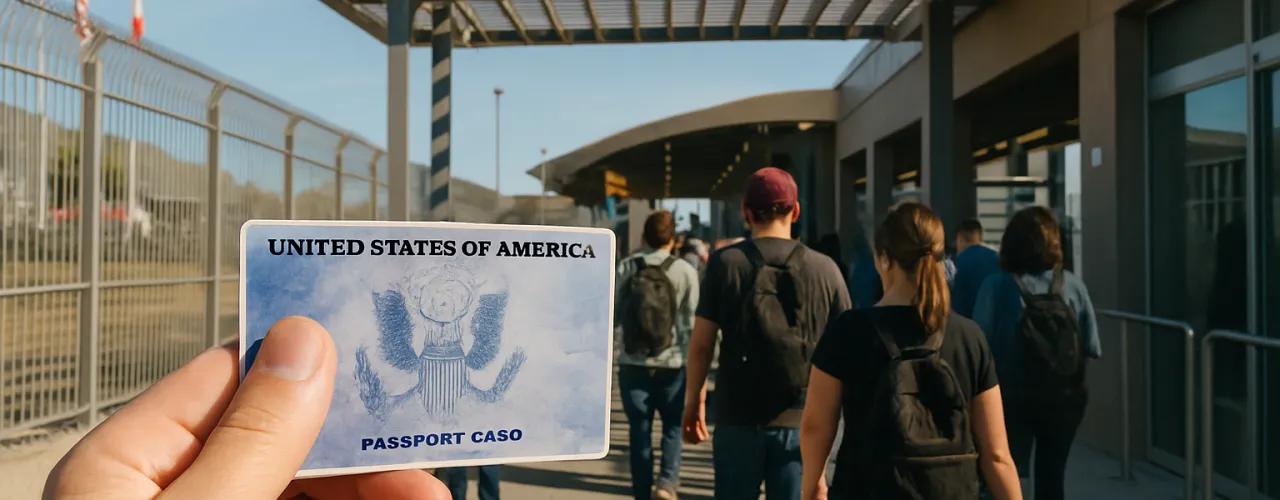
- To return to the United States: this is the part that is non-negotiable. U.S. citizens re-entering by land must present a WHTI-compliant document — a passport book, a passport card, or an enhanced driver's license from a participating state. A regular Arizona driver's license is not sufficient by itself.
- Lawful permanent residents: carry your green card (Form I-551).
- Children: U.S. citizen children under 16 crossing by land may present a birth certificate, but a passport or passport card keeps things simple.
- If you drive across: bring your driver's license and vehicle registration. Confirm with your insurer whether your policy covers Mexico; short-term Mexican auto insurance is inexpensive and widely available near the border, and many drivers buy it for peace of mind even for a same-day clinic run.
Do you need a passport to see a dentist in San Luis Río Colorado?
Yes — not to see the dentist, but to come home. Mexico will not ask for a visa on a short daytime dental visit to the border zone, but U.S. Customs and Border Protection requires a passport, passport card, or another WHTI-compliant document when you re-enter the United States by land. The passport card ($65 for a first-time adult applicant, and valid for land and sea crossings from Mexico and Canada) is the budget-friendly option many border dental patients choose.
Crossing on Foot vs. Driving Across
Both work well for dental visits; the right choice depends on your appointment and your mobility.
| Factor | Walking across | Driving across |
|---|---|---|
| Parking | Paid lots and street parking on the Arizona side, near the port | Park in SLRC at or near the clinic |
| Getting to the clinic | Walk or take a local taxi from the crossing | Door-to-door in your own vehicle |
| Return wait | Pedestrian line; often faster off-peak | Vehicle lanes; can back up at peak hours |
| After sedation or surgery | Easier if a companion drives you home from the U.S. side | Requires a companion driver — do not drive sedated |
| Best for | Clinics near the border, single quick visits | Mobility-limited patients, families, multi-stop trips |
If you are having an extraction, implant placement, or anything involving sedation, plan for a companion who can drive — this is the single most overlooked piece of border dental logistics. Before you commit to any appointment, it also pays to know what your treatment should cost: get your free quote through the MolarCity San Luis Río Colorado page and cross with numbers in hand.
Parking on the Arizona Side
If you prefer to walk across, San Luis, Arizona has paid parking lots and metered or street parking within walking distance of the San Luis I pedestrian entrance. Arrive with cash for lot fees, note any posted time limits, and leave nothing visible in the car. Snowbird season (roughly November through March) is the busiest period; lots fill earlier in the day. If lots near the port are full, allow a few extra minutes rather than parking somewhere questionable — a towed car erases a dental discount quickly.
Timing Your Trip: Peak Hours and the Return Line
Entering Mexico is normally quick — often a matter of minutes. Budget your patience for the northbound return. As general patterns (not promises): weekday mornings tend to be calmer; late afternoons, weekends, holiday periods on either side of the border, and the winter snowbird season bring longer lines; and commuter flows can bulge early in the morning and around the end of the workday. None of this is fixed, which is why the reliable move is checking CBP's official Border Wait Times page the day of your trip and timing your dental appointment mid-morning, with a buffer before you need to be back.
Practical rhythm for a typical appointment: cross by mid-morning, be seen, have lunch in SLRC while any lab work or paperwork finishes, and head north before the late-afternoon build-up.
What to Expect When You Return to the U.S.
At the port, a CBP officer will inspect your document, ask where you went and what you are bringing back. "Dental appointment in San Luis Río Colorado" is one of the most common answers they hear — be straightforward, declare everything, and the stop is usually brief. Keep your dental receipts and treatment paperwork handy; they support both your declaration and any insurance or HSA/FSA reimbursement claim later.
Can you bring back medication from a Mexican dental visit?
If your dentist prescribes medication — commonly antibiotics or pain relief after oral surgery — FDA and CBP rules generally allow travelers to bring back personal-use quantities of medication that is properly declared, and having a valid prescription with pharmacy documentation is expected. Two firm cautions: controlled substances (including many strong painkillers) face much stricter rules and are best avoided entirely without specific legal guidance, and never transport medication that is not declared or not yours. Keep everything in original labeled packaging, carry the written prescription, and declare it at the booth. When in doubt, ask the CBP officer — declared honesty is never the problem.
What else can you bring back duty-free?
Returning U.S. residents generally have a personal duty-free exemption that comfortably covers typical purchases from a day trip (snacks, crafts, over-the-counter sundries). Alcohol and tobacco have separate limits and state rules. Again: declare everything — the exemption exists to be used.
Why Patients Make This Crossing at All
The reward on the other side of five minutes of document checks is substantial: border-market dental pricing at 60–75% below U.S. fees — single implants at $900–$1,500 versus $2,500–$5,000, All-on-4 at $8,000–$12,000 per arch versus $20,000–$30,000, veneers at $350–$500 versus $1,500–$2,500. The full market table is in the San Luis Río Colorado dental price list 2026.
Worth knowing before you choose a destination: Los Algodones remains the world's dental capital with 300+ clinics, ten minutes from Yuma via the Andrade crossing, and publishes the deepest verified pricing on the border (see the Los Algodones price list). San Luis Río Colorado is a smart alternative if you want shorter border waits, drive-across access, or you live near San Luis, Arizona. The head-to-head lives in our SLRC vs. Los Algodones comparison.
Crossing Checklist and Next Step
- Passport or passport card (WHTI-compliant document) — required for your return.
- Written quote and appointment confirmation from a credential-verified clinic.
- Payment method confirmed with the clinic (most take U.S. dollars and cards).
- CBP Border Wait Times checked the morning of your trip.
- Companion driver arranged if your treatment involves sedation or surgery.
- Prescriptions and receipts kept together for the return inspection.
The crossing itself is the easy part — the preparation is where good outcomes are made. Start at the San Luis Río Colorado dental page and get your free quote before you drive south.
Frequently Asked Questions
Do I need a passport to cross at San Luis, AZ for dental care?
Can I walk across the border at San Luis?
Is there parking available near the San Luis border?
What are the peak hours at the San Luis crossing?
Can I bring back prescription medication from Mexico?
Questions this page answers
- do I need a passport to cross into San Luis Mexico for dental work
- can I walk across the border at San Luis Arizona
- where to park when crossing at San Luis AZ for dentist
- what are the peak hours at San Luis border crossing
- can I bring back prescription medication from Mexico
- how long does it take to cross at San Luis Arizona
- is it safe to drive into San Luis Mexico for dental
- what documents do I need to cross back into US at San Luis
- best time to cross at San Luis for dental appointment
- San Luis border crossing hours for pedestrians