The short answer
For routine care, crowns, root canals, straightforward extractions and most implant work, stay on the lakeside. There are 71 clinics there and no reason to drive. Go to Guadalajara for genuine specialist care, complex or hospital-based surgery, general anaesthesia, and night-time emergencies when nothing lakeside is open.
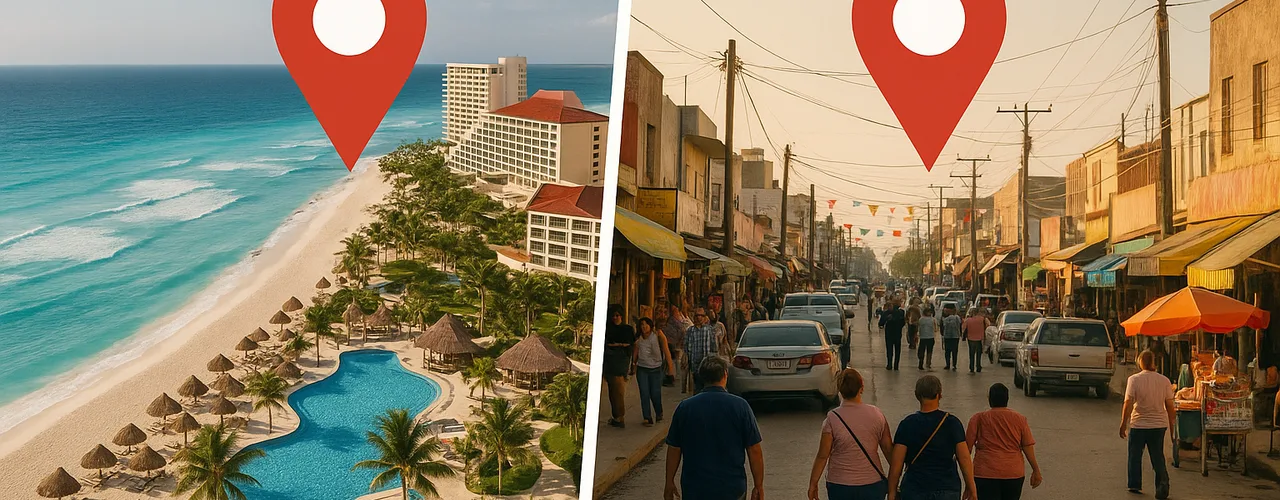
The 45 minutes between them is the whole point. It is short enough that the city is a real backstop, and long enough that you do not want to drive it for a cleaning.
Why we track Lake Chapala separately from Guadalajara
Because that is how people actually search. Someone living in Ajijic looks for a dentist in Ajijic, or a Lake Chapala dentist. They do not search for a dentist in Guadalajara, because Guadalajara is not where they live.
If we folded the lakeside into the Guadalajara listing, the clinics that genuinely serve this community would disappear underneath hundreds of city practices that have never treated a lakeside patient. Molar City tracks 71 clinics across Ajijic, Chapala, Riberas del Pilar, San Antonio Tlayacapan and Jocotepec as their own market, on purpose.
What the lakeside already covers
More than newcomers expect. Seventy-one clinics in a handful of villages is a dense market by any standard, and it is dense because it has been serving the largest American and Canadian retiree community in Mexico for decades. In practice that means:
- English by default. Most lakeside dentists work in English because their patient base always has.
- Routine and restorative care without leaving the corridor. Most residents do not even need a car to get to the dentist.
- Implants and full-arch work. Single implants run $800 to $1,400, zirconia crowns $300 to $500, and All-on-4 $7,500 to $12,000 per arch.
- Real choice. With that many clinics, a second opinion is an afternoon, not an expedition.
- Accountability. Community word of mouth here is relentless, and a clinic that mishandles a case hears about it for years.
When Guadalajara is genuinely the better call
This is not a marketing question, it is a clinical one. The city is a major metropolitan medical centre and there are real cases where it is the right place to be.
Specialist care beyond general practice
Oral and maxillofacial surgery, complex periodontal reconstruction, difficult endodontic retreatment, orthognathic cases and paediatric dental specialties are concentrated where the population is. If your lakeside dentist says a case needs a specialist, take the referral seriously. Referring out is a sign of good judgement, not a shortfall.
Hospital-based procedures and general anaesthesia
Some surgeries need a hospital setting, an anaesthesiologist and post-operative monitoring. That infrastructure belongs to the city. If your case involves significant medical complexity, cardiac or clotting considerations, or you require full general anaesthesia rather than local anaesthetic with sedation, Guadalajara is where that happens safely.
Night-time and holiday emergencies
Lakeside clinics keep normal hours. A tooth that fractures at 11pm on a Sunday, facial swelling that is spreading, uncontrolled bleeding, or trauma from a fall are all situations where the honest answer is to drive to the city rather than wait for Monday. Spreading facial swelling with fever or difficulty swallowing is a medical emergency, not a dental inconvenience, and it needs a hospital.
Advanced imaging or unusual lab work
Most lakeside clinics handle standard imaging, and many have CBCT on site. Occasionally a case needs imaging or a laboratory capability that is easier to source in the city. Your dentist will tell you if that applies.
How to plan the drive if you need it
Coming from abroad, you fly into Guadalajara International (GDL), which has direct service from more than a dozen United States cities, and travel 45 minutes south to the lake. Shuttles run all day, so a visitor never needs a rental car. Living here, the same route works in reverse: a specialist appointment in Guadalajara is a morning, not a trip.
Two practical notes. Book city appointments outside rush hours, because 45 minutes is the good-traffic figure. And have your lakeside dentist send records and imaging ahead, so the specialist is not re-diagnosing from scratch and charging you for it.
The arrangement that works best
Most long-term residents end up with the same setup: one lakeside dentist who knows their mouth, plus that dentist relationships with specialists in Guadalajara for the rare case that needs them. You get continuity for the 95% of dentistry that is routine, and access to city-level capability for the 5% that is not.
Choosing a lakeside dentist partly on the quality of their referral network is a sensible criterion. Ask who they refer to and how often. A dentist with no answer to that question has told you something.
About Molar City
Molar City is an independent dental tourism directory since 2007. We are not a dental clinic and we do not practice dentistry. Our clinic ranking is algorithmic, built from digital footprint, free to consult, and no clinic can pay for its position.