The short answer
Dentistry in Mexico is a licensed profession with university training, supervised practice and a national professional registry, and Puebla is one of the cities that trains those dentists. The honest framing is not "is Mexico safe", it is "is this clinic the right one". With 212 clinics tracked in the city, the spread between the best and the weakest is real, and the work of narrowing it is yours. Below is exactly how.
How dentists are trained and licensed in Mexico
A dentist completes a university degree in dentistry followed by a period of supervised social service before practising independently. Specialists complete postgraduate training on top of that. Practising dentists hold a professional licence, the cedula profesional, and specialists hold a separate one for their specialty. Puebla's universities are part of that pipeline, which is why the city has a deep specialist bench.
You may ask for those licence numbers. In a market that treats international patients, the question is routine.
What actually goes wrong
Complaints rarely come from exotic failures. They cluster in predictable places:
- No written plan. A verbal price, no itemization, a different total at the end.
- Unnamed materials. An implant with no brand stated is a component that may be unserviceable later.
- Unclear responsibility. Nobody agreed in advance who handles a problem that appears at home.
- Compressed timelines. A plan squeezed into the days the patient happened to book.
- Choosing on price alone. The cheapest quote is often the one missing the abutment or the graft, not the one with better margins.
None of that is specific to Mexico. It is what happens when a medical decision is made quickly and verbally.
The verification list
- Licence. Professional licence number of the treating dentist, plus the specialty licence if a specialist operates.
- Named roles. Who performs the surgery, who makes the prosthesis.
- Written, itemized plan after an exam with imaging, not a price quoted over chat.
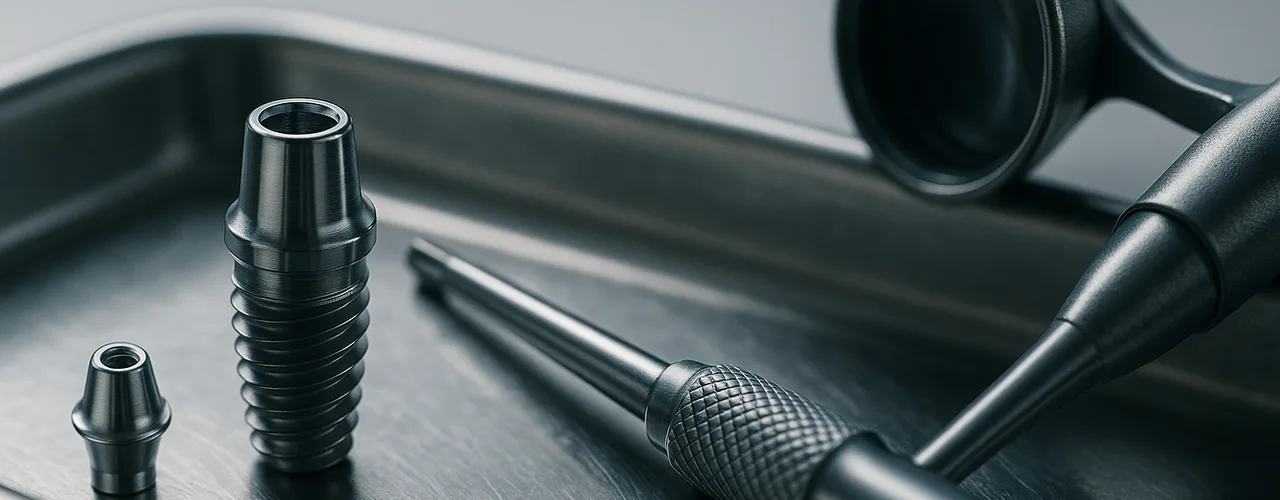
- Materials by brand. Implant system and prosthetic material.
- Sterilisation. Ask how instruments are sterilised, whether the autoclave is monitored with biological indicators, and ask to see the area.
- Complication policy. Who is responsible after you leave, what it costs, whether it requires returning to Puebla.
- Warranty in writing, with duration and conditions.
- Your records. Copies of images and treatment notes to take to your own dentist.
A clinic that answers all eight without friction has told you a great deal about how it operates.
What a big market means for you
212 clinics is an advantage and a responsibility. The advantage is genuine choice: specialists, second opinions, and price competition driven by local patients rather than tourists. The responsibility is that you cannot outsource the filtering. In a town with eight clinics the market does some of the work for you; here it does not.
Practical approach: shortlist three, get written plans from all three after exams, and compare like for like. The differences between those three documents will teach you more about each clinic than any amount of reading.
Where our ranking helps, and where it stops
Molar City publishes a free ranking of Puebla clinics scored from public digital footprint: reviews, ratings, website, social presence, photos and profile completeness. It is free and algorithmic, and no clinic can pay for its position.
What it measures is visibility. What it cannot measure is sterilisation protocol, surgical judgement or how a practice behaves when a case goes sideways. Use it to build the shortlist fast, then use the eight questions to choose.
When to stay home
- Active infection or acute pain right now.
- A medical history that makes surgery abroad risky, without clearance from your physician.
- No ability to return for a second stage or warranty work.
- Pressure to decide immediately, or a clinic that will not put the plan in writing.
Reading reviews critically
Reviews are useful, but not the way most people use them. A five-star average built on fifteen ratings says less than a four-point-six built on four hundred. What is worth reading is the substance:
- Do reviewers describe the treatment, or only the reception staff and the decor?
- Are there reviews from months or years later, which is when implant problems surface?
- How does the clinic respond to criticism? A measured reply to a bad review tells you more than fifty good ones.
- Is there a sudden cluster of perfect scores in a short window? That pattern is worth a second look.
What a good clinic does that a weak one does not
Behaviour beats marketing. The signals worth trusting: it says no to a timeline that does not fit; it images before it prices; it names the people who will do the work; it puts plan, costs and warranty in writing; and it answers what happens if the treatment fails and who pays. None of that costs a clinic anything, and all of it is hard to fake on paper.
What Molar City is, and is not
Molar City has been an independent dental tourism directory since 2007. We are not a dental clinic, we do not practice dentistry and we do not certify clinical quality. We publish public data and coordinate logistics; the verification is yours, and any clinic worth choosing will help you do it. See our Puebla dental guide.