The short answer
Fly into Phuket International Airport (HKT), either directly or via Bangkok, and stay near your clinic, because the island is larger and slower to cross than it looks. Plan a few days for simple work, about a week for crowns or veneers and two trips months apart for implants or All-on-4. Put beach, boat and diving days before surgery or after your dentist clears you. Check entry requirements for your passport and your government's travel advice before booking.
Getting to Phuket
- From Australia. Perth is roughly 5 to 6 hours away. From the east coast, journeys are longer and often connect through Bangkok, Singapore or Kuala Lumpur, though direct services operate at times.
- From New Zealand. Expect at least one connection.
- From the Gulf. Gulf hubs fly to Phuket directly.
- From the UK and the US. Usually one connection, through the Gulf, Bangkok or another Asian hub.
- From Bangkok. Domestic flights take about an hour and a half and run many times a day.
Schedules change by season, so check current options when you plan.
From the airport
HKT sits in the north of the island. Phuket Town is roughly 30 km away, and Patong, Kata and Chalong are further south and west. Allow about 45 minutes to over an hour by taxi depending on your destination and traffic. Airport taxis, ride-hailing apps and transfers booked through your hotel or clinic are all common. After surgery, a pre-booked car is the easiest option.
How long to stay
| Treatment | Typical stay | Phuket estimate (USD) |
|---|---|---|
| Cleaning and check-up | 1–2 days | $40 – $80 |
| Whitening | 1–2 days | $150 – $300 |
| Root canal + crown | 5–7 days | $400 – $800 |
| Zirconia crowns | 5–7 days | $300 – $550 each |
| Porcelain veneers | About 7 days | $300 – $550 each |
| Single implant | Two trips, 4–7 days each | $700 – $1,400 |
| All-on-4 | Two trips, 7–14 days each | $8,000 – $14,000 per arch |
These are estimates. Get the visit schedule in writing from your clinic before you book flights, and leave a spare day at the end.
Where to stay
Phuket Town
The provincial capital, with the Sino-Portuguese shophouses of the Old Town, good local food, markets and many dental clinics. It is not on the beach, but it is practical, central and better value. A good base for appointment-heavy days.
Patong
The island's busiest resort, with a long beach, endless hotels and restaurants, and Bangla Road's nightlife. Convenient for clinics in the area, but noisy. Not everyone's idea of a recovery spot.
Kata and Karon
Calmer beach areas south of Patong, popular with families and longer-stay visitors. Good for a gentler holiday between appointments.
Chalong and Rawai
The south of the island, home to many foreign residents, with clinics, the Chalong temple and access to Promthep Cape. Quieter and residential.
Getting around
Phuket has little useful public transport for visitors. Taxis, ride-hailing apps and drivers booked by hotels are the norm. Distances look short on a map but hilly roads and traffic make travel slow, especially in high season. Renting a scooter is common but is the source of many injuries; it is a poor idea at any time and a worse one after dental surgery.
Weather and seasons
The dry high season runs roughly from November to April, with calm seas, sunshine and the highest prices. From about May to October the southwest monsoon brings rain, rough seas and strong currents on west-coast beaches. Rain often comes in bursts with dry spells between, clinics work normally, and hotels are cheaper. If your trip is mainly about treatment, the monsoon is a reasonable choice; if you want reliable beach days, go in the dry season.
Building your days around treatment
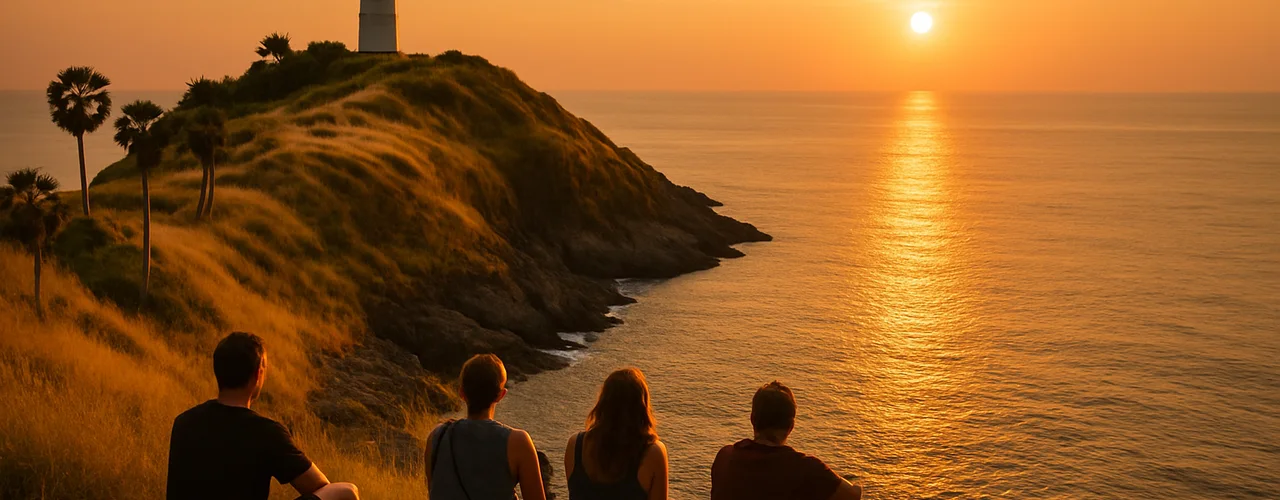
A good rhythm is to arrive a day or two early, get over the flight and enjoy the sea before any surgery. On treatment days, keep plans light. On recovery days, choose low-effort outings: a wander through Phuket Old Town's Thalang Road, the Big Buddha viewpoint, Wat Chalong, sunset at Promthep Cape or a slow lunch by the water. Save Phang Nga Bay tours, island hopping, snorkelling and diving for before surgery or after your dentist gives the all-clear. If you are having implants placed, ask specifically about diving and flying.
Money and connectivity
Thailand's currency is the baht (THB). Cards are accepted at most clinics and hotels; cash is still useful for markets and small restaurants. Ask whether your clinic quotes in baht or US dollars and whether card payments carry a surcharge. A local SIM or eSIM is inexpensive and makes ride-hailing and messaging your clinic easy.
Phuket or Bangkok?
Phuket and Bangkok share the same Thai price tier, and Bangkok is only about an hour and a half away by air. The difference is scale. Bangkok has the larger dental market, with more specialists and more clinics that handle complex implant and full-arch cases every week. Phuket's strength is the holiday: you can fit appointments around beach days and recover somewhere pleasant. A sensible approach for many patients is to do crowns, veneers and straightforward implants in Phuket, and to compare Phuket and Bangkok plans side by side for bigger cases. Our Bangkok guide covers the capital.
Safety and practicalities
Phuket is one of Thailand's busiest holiday islands and most visits are trouble-free. The real risks are ordinary ones: road accidents, especially on rented scooters, strong currents at west-coast beaches during the monsoon months (respect the red flags), heat and dehydration, and the occasional scam around taxis and jet-ski rentals. After dental surgery, skip the scooter altogether and use a car with a driver. Before you book, read your own government's official travel advice for Thailand: Smartraveller for Australians, SafeTravel for New Zealanders, the FCDO for UK travellers and the State Department for Americans. Check carefully whether your travel insurance covers complications from elective treatment, because many policies do not.
How Molar City fits in
Molar City is an independent dental-tourism platform, not a clinic. We have guided patients since 2007, starting in Los Algodones, Mexico, and we publish a free ranking of every dental clinic we can find in each city we cover. In Phuket that means 93 clinics, scored from their public digital footprint. No clinic can pay for its position, and the prices we publish are city-level estimates, never a quote from one clinic. What you will actually pay is in the written treatment plan a clinic gives you after examining you or your X-rays.
Compare clinics in the independent ranking of Phuket dental clinics and read the Phuket dentist guide for prices, areas and logistics.
Frequently asked questions
How far is Phuket airport from Patong?
Roughly 45 minutes to an hour by car, depending on traffic. Phuket Town is a little closer.
How many days do I need in Phuket for dental work?
One or two days for simple work, about a week for crowns or veneers, and two separate trips for implants or All-on-4.
Which area of Phuket is best for a dental trip?
Wherever your clinic is. Phuket Town is practical and central, Kata and Karon are calmer beach bases, and Patong is lively but noisy.
Is the monsoon season a bad time to go?
Not for treatment. Clinics work normally from May to October, but seas are rougher and beach days less reliable.
Do I need a visa for Thailand?
It depends on your passport. Check the current entry and visa requirements with official Thai government sources before you book.
93 clinics scored on reviews, rating and digital presence. No clinic pays for its position.
- #1 BANGKOK HOSPITAL SIRIROJ
- #2 The dentist studio
- #3 Luxesmile Dental Clinic