There is no such thing as a safe city or an unsafe city for dentistry — there are individual clinics, and Mexico has no mandatory clinic-level accreditation that sorts them for you. So the useful version of this question is: what can you actually verify before you sit down in Agua Prieta? Here is our data on all 57 listed clinics, and the checks that matter.
What the data shows
| Signal | Agua Prieta | How to read it |
|---|---|---|
| Listed clinics tracked | 57 | A small but real market |
| With at least one review | 49 | Most have some public feedback |
| Average among rated clinics | 4.57 | Solid, and slightly below the Sonora border average |
| Total Google reviews | 693 | Modest; Los Algodones has 12,891 |
| Rated 4.5 or better | 37 | Most on small samples |
| With 50+ reviews | 2 | Only two averages are statistically meaningful |
| With a website | 24 | Under half; not a quality signal either way |
The practical takeaway is the same one we give for every small market: filter by review depth before star rating. Thirty-seven clinics at 4.5 or better sounds reassuring until you notice most of those averages rest on under twenty reviews.
How Mexican dental licensing works
Every dentist practising legally in Mexico holds a cédula profesional, issued after a recognised dental degree. Specialists — oral surgeons, prosthodontists, endodontists, periodontists, orthodontists — hold a second cédula for the specialty. Both are public records that can be looked up by name.
Ask for the specialty number specifically when the work is surgical. A general dentist may legally place implants in Mexico, which is not the same as a surgeon with a postgraduate qualification in implantology. That is not an accusation about anyone — it is a distinction you are entitled to make before choosing.
What does not exist is a compulsory dental clinic accreditation scheme. Association memberships and certificates on the wall show professional engagement; they are not audits. Read them as mild positives, nothing more.
What to verify in the chair
- Sealed instrument pouches, opened in front of you, with a colour-changed sterilisation indicator. Ask to see the autoclave; a clinic proud of its protocol will show you without hesitation.
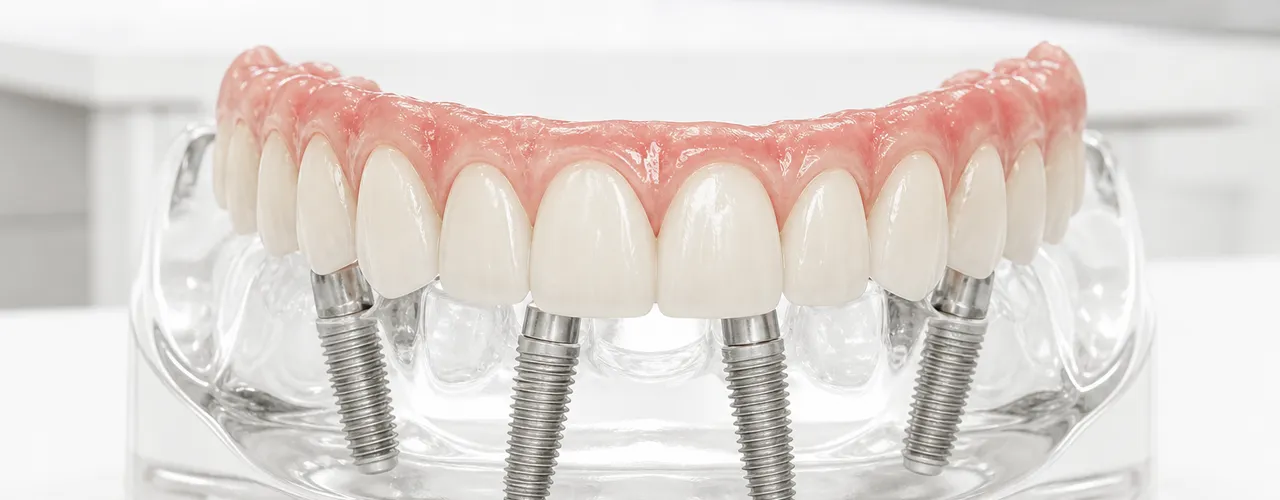
- Imaging. If implants are planned, ask whether the case will be planned on a CBCT scan or only a 2D panoramic.
- A written, itemised treatment plan issued after the exam and imaging, naming brands and materials.
- Where lab work is made and how long it takes — in a small market, crowns often go to Hermosillo or Nogales.
- Written warranty terms, plus what a follow-up or adjustment visit costs.
- Aftercare instructions in writing and a phone number for problems, especially if you are crossing back the same day.
Red flags
- A firm price quoted by phone or WhatsApp before any exam or imaging.
- Pressure to pay a large deposit today for a price that "expires".
- Refusal to name the implant brand or crown material in writing.
- A plan that expands sharply once you are already in the chair and anaesthetised.
- Any guarantee of a specific medical outcome. No ethical clinician offers one, in any country.
Practical safety on a walk-across day trip
Separate from clinical quality, the trip itself is about as low-friction as dental travel gets. You park on the US side in Douglas, walk through the port of entry, and the clinics are a few blocks into the Centro. Some sensible habits:
- Cross in the morning and go back before dark. Standard advice at any border, and easy to follow when the clinics are walking distance from the gate.
- Carry a passport or passport card, and keep the number stored separately.
- Bring a companion for surgery or sedation days. You cannot drive after IV sedation, and you should not be walking back across alone right after oral surgery.
- Stay in the Centro. There is no reason for a dental visit to take you anywhere else.
- Keep pesos and a card. Not every small clinic takes cards, and dollar exchange rates offered in-clinic are rarely generous.
To compare all 57 listed clinics on the same public criteria, see our Agua Prieta clinic ranking. Molar City is an independent dental tourism platform — not a clinic, and we do not treat patients. We rank clinics whether or not they work with us, and we have covered Mexican dental care since 2007.
Frequently asked questions
Is dental work in Agua Prieta safe?
It depends on the individual clinic, not on the city. Verify the specialty cédula, see sterilisation protocols in person, insist on a written itemised plan issued after imaging, and prioritise clinics with deeper review histories.
How do I check a Mexican dentist's licence?
Ask for the cédula profesional number, and the separate specialty cédula for surgical work. Both are public records that can be looked up by name.
Is it safe to walk across from Douglas?
The crossing is a short pedestrian walk and the clinics are a few blocks into the Centro. The usual advice applies: cross in the morning, return before dark, and bring a companion on surgery days.
How many Agua Prieta clinics are well reviewed?
Of the 57 we track, 37 are rated 4.5 stars or better, but only two have 50 or more reviews. Review depth is the more reliable filter.
What if there is a problem after I go home?
Ask before treatment what the written warranty covers and what a follow-up visit costs. Because you cross on foot, returning for an adjustment is usually a day trip rather than a journey.
Frequently Asked Questions
Are dentists in Agua Prieta safe?
How does Mexican dental licensing work?
What should I verify in the dental chair?
What are red flags for a dental clinic in Agua Prieta?
Is it safe to walk across the border to Agua Prieta for a day trip?
Questions this page answers
- are dentists in Agua Prieta safe
- how to check if a dentist in Mexico is licensed
- best dentist in Agua Prieta for Americans
- dental work in Agua Prieta reviews
- walk across border to Agua Prieta for dental
- is it safe to get dental work in Agua Prieta
- Mexican dental license verification
- red flags for dental clinics in Mexico
- dentist near Douglas Arizona
- what to ask a dentist in Mexico before treatment