The short answer
A zirconia crown in Puerto Escondido runs $300 to $550 USD and a porcelain veneer $350 to $600. Unlike implants, these are treatments that genuinely fit inside a single stay of a few days to a week, which makes them the most practical thing to have done here if you are visiting rather than living.
Crown or veneer?
They are often confused and they solve different problems.
- A crown covers the whole tooth. It is a structural repair, used when a tooth is broken, heavily filled or has had a root canal. It restores function first and appearance second.
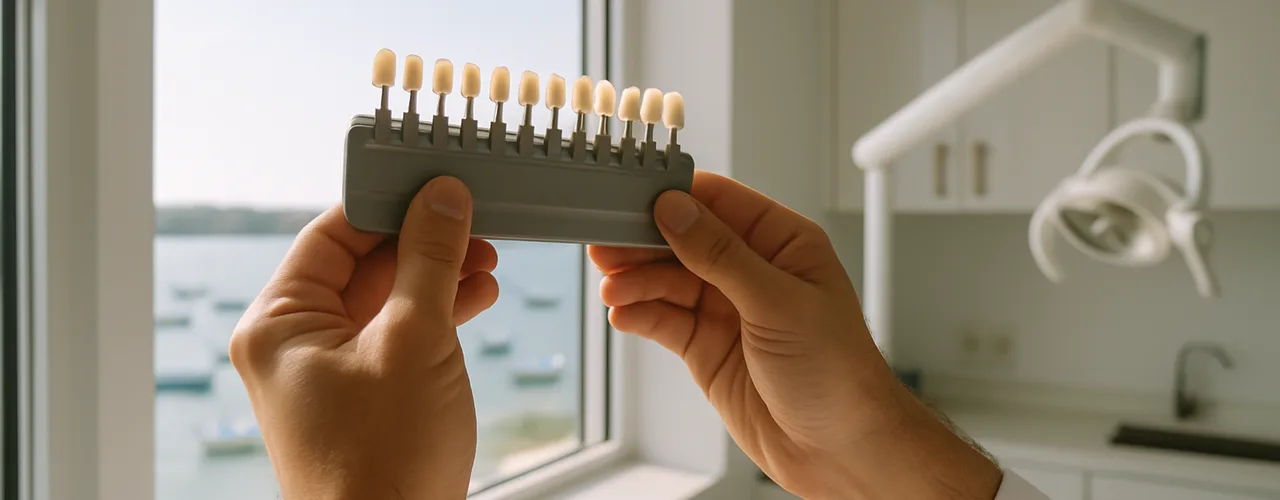
- A veneer is a thin shell bonded to the front surface only. It is cosmetic, used for colour, shape and small gaps, and it requires the underlying tooth to be fundamentally sound.
If a dentist proposes veneers on a tooth you know is damaged, ask why a crown is not the better answer. And if someone proposes veneers on eight or ten teeth at once, ask how much natural enamel is being removed and whether the change is reversible. It generally is not.
How many appointments
- Consultation and preparation. Exam, imaging where needed, shade selection, tooth preparation and impressions or a digital scan. Temporaries fitted the same day.
- Laboratory time. Usually a few working days while the piece is made. Clinics with an in-house mill can sometimes compress this to a single day, which is worth asking about if your stay is short.
- Fitting. Try-in, adjustment of bite and colour, then cementation.
Budget five to seven days in town for a small number of units, and confirm the lab turnaround before you book your flight home. That single question prevents most of the scheduling problems patients run into.
Materials, and why they are not interchangeable
- Zirconia — very strong, the usual choice for back teeth and heavy bites.
- E.max (lithium disilicate) — more translucent, a common choice for front teeth where appearance matters most.
- Porcelain fused to metal — older, durable, but can show a dark line at the gum over time.
- Composite veneers — cheaper and reversible, but they stain and wear faster than porcelain.
Ask which material is in your quote by name. "Porcelain" alone is not an answer, and material is one of the main reasons two quotes differ.
Caring for them afterwards
Crowns and veneers are not maintenance-free, and the habits that protect them are the same ones that protect natural teeth, with two additions.
- Grinding is the main enemy. If you clench or grind at night, porcelain chips. A night guard costs a fraction of a replacement veneer and is the single best investment you can make after cosmetic work. Ask about it at the fitting appointment, not a year later.
- The gum line is where problems start. Decay can form at the margin where the restoration meets the tooth, and it is invisible until it is not. Regular cleanings matter more after crown work, not less.
- Staining is uneven. Porcelain does not stain the way natural enamel does, so coffee, red wine and tobacco gradually make the surrounding teeth darker than the restoration. Whitening natural teeth before cosmetic work, rather than after, avoids a permanent mismatch, because porcelain will not lighten later.
- Do not open things with your teeth. Obvious, universally ignored, and a common cause of a chipped veneer.
Ask the clinic what its policy is if a restoration chips within the warranty period, and whether an adjustment visit is included in the price you paid.
Why this treatment suits Puerto Escondido
Because the clinics here serve a resident community with routine, recurring needs, crowns and cosmetic work are bread-and-butter procedures rather than rare events. The town's 76 clinics give you real choice for exactly this kind of work, and Pacific-coast pricing sits below the Caribbean resort corridor. Start with the free clinic ranking, shortlist three and compare written quotes.
Can a crown be done in one visit?
Sometimes, if the clinic has an in-house milling unit. Otherwise expect a few working days of laboratory time between preparation and fitting. Ask before booking your return flight.
How long do crowns and veneers last?
With good hygiene and no heavy grinding, many years. Nobody can promise a specific lifespan, and any clinic that guarantees a number rather than describing a warranty is overselling. Ask what the written warranty actually covers.
Do veneers damage the natural tooth?
Porcelain veneers require removing a thin layer of enamel, which does not grow back. That makes the decision effectively permanent. Composite veneers remove less and are reversible, but they stain and wear sooner. Discuss the trade-off before agreeing to a full set.
What Molar City is, and is not
Molar City has been an independent dental tourism directory since 2007. We are not a dental clinic, we do not practice dentistry, and nothing here is a treatment recommendation. Which restoration suits your teeth is a decision for the licensed dentist who examines you.