The short answer
A full-arch All-on-4 in Mazatlán runs $8,000 to $13,000 USD per arch, roughly 50 to 70 percent below common United States and Canadian pricing. It is normally a two-trip treatment: implants and a provisional bridge on the first stay, a healing period measured in months, then the definitive bridge on a second stay. The city has 136 tracked dental clinics, so you will get very different quotes for the same mouth, and understanding what moves that range is the whole job.
What All-on-4 actually is
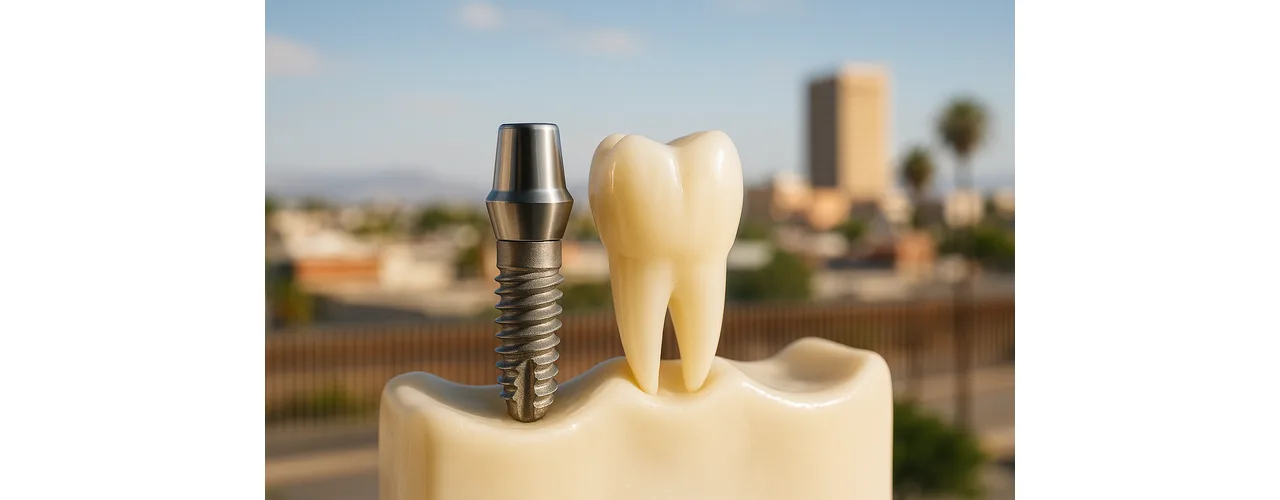
It is a full-arch restoration supported by four implants, angled so that they anchor in the available bone and often avoid the need for grafting. A single fixed bridge is attached to those implants, replacing the teeth of an entire upper or lower jaw. It is not a denture that you take out at night, and it is not one implant per tooth. Some cases use more than four implants, in which case you may see the treatment described with a different number, and the price moves accordingly.
What drives the $8,000 to $13,000 spread
- Material of the final bridge. Acrylic on a metal frame sits at the lower end, monolithic zirconia at the upper end, with real differences in durability, weight and repairability.
- Number of implants. Four is the baseline. Cases needing five or six cost more.
- Implant system. Named international systems cost more than generic fixtures and are easier to service years later, anywhere in the world.
- Extractions and bone work. If teeth must come out or bone must be prepared, that is extra.
- Planning and imaging. CT-based planning and guided surgery cost more than freehand placement from a panoramic x-ray.
- Whether the provisional bridge is included. Some quotes cover only the definitive prosthesis.
- One arch or two. Prices above are per arch. A full mouth is two arches.
The process, step by step
Before you fly
Send recent x-rays or a CT scan, a list of medications, and your medical history. Expect a preliminary plan and a preliminary price, and expect both to be revised after the in-person exam. Ask your physician at home to weigh in if you have any condition affecting healing, bleeding or anesthesia.
First trip
Typically: consultation and imaging on arrival, then extractions if needed and surgical placement of the implants, then a provisional fixed bridge so you leave with teeth. Clinics generally want you in town for several days afterward for review appointments and adjustments. Build buffer days into the trip. Do not book a flight for the day after surgery.
Between trips
This is the healing window, commonly cited in months, while bone integrates with the implants. You will be on the provisional bridge and usually on a modified diet for part of that period. Follow the clinic's written aftercare instructions and keep in contact. If something feels wrong, tell them immediately rather than waiting for the next trip.
Second trip
Impressions or digital scans, try-in of the definitive bridge, adjustments, and delivery. This stay is normally shorter than the first, but it is not a single appointment. Plan for several working days.
Typical timeline
| Stage | Where | What happens |
|---|---|---|
| Records and plan | Home | Imaging sent, preliminary plan and estimate |
| Trip one | Mazatlán | Exam, extractions, implant placement, provisional bridge, reviews |
| Healing | Home | Months of integration on the provisional, remote check-ins |
| Trip two | Mazatlán | Scans, try-in, delivery of the definitive bridge |
Most patients schedule both trips inside the November to April window, when the dry season, the snowbird population and the seasonal direct flights line up.
Who is often not a candidate
Only a clinician who has examined you and reviewed your imaging can answer this, but the usual complicating factors are insufficient bone volume, uncontrolled systemic conditions, heavy smoking, certain medications affecting bone metabolism, and untreated gum disease. Some of these are managed rather than disqualifying. A clinic that tells you everyone qualifies has not examined you.
Questions to ask before you pay a deposit
- Which implant system, and which material for the provisional and the definitive bridge?
- Is the provisional included in the quoted price?
- How many days do I need to be in Mazatlán for each trip?
- What is covered by the warranty, for how long, and does it require me to return?
- Who do I contact from home if something breaks or hurts, and how fast do they answer?
- What happens, and what does it cost, if an implant fails to integrate?
- Can I have the plan, the invoice and my records in writing to take home?
Aftercare is part of the purchase
A full-arch bridge needs maintenance: professional cleaning, periodic checks of the screws and fit, and eventually repairs. Ask before you commit whether a dentist near your home is willing to service the system your Mazatlán clinic used. That single question is a good reason to favor a named international implant system over an unnamed one, even at a higher price.
When to slow down
If you are being asked to decide today, if the quote arrived before any exam, if nobody will name the materials, or if you cannot realistically make the second trip, stop. Full-arch treatment is irreversible. Molar City's free ranking of Mazatlán clinics is built algorithmically from public digital footprint and no clinic can pay for position, which makes it useful for building a shortlist, but the verification questions above are still yours to ask. Molar City is a directory, not a clinic, and does not practice dentistry.