The short answer
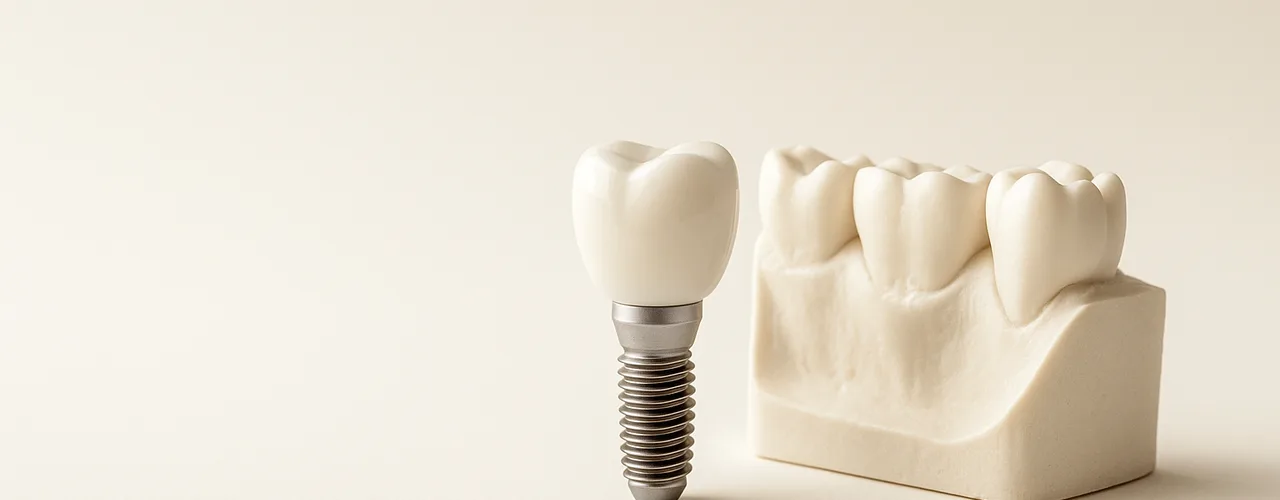
A full-arch All-on-4 in Oaxaca runs $8,000 to $13,000 USD per arch. Both arches roughly double that. The treatment replaces a full set of upper or lower teeth with a fixed bridge anchored on four implants, and it is the case type where travelling makes the most financial sense: the same arch commonly costs two to four times more in the United States or Canada, so the savings comfortably absorb two sets of flights.
What the range is made of
- The provisional bridge you wear while everything heals, usually acrylic, fitted within a day or two of surgery.
- The definitive bridge, months later. Material drives the price: acrylic on titanium at the lower end, monolithic zirconia at the upper end.
- The four implants and their brand.
- Extractions of any remaining teeth in that arch.
- CBCT imaging, surgical guides and, in some cases, sedation.
- Bone grafting or a zygomatic approach if there is not enough bone, which moves the case out of the standard range entirely.
When a clinic quotes $8,000 and another quotes $13,000 for what sounds like the same arch, the difference is nearly always the definitive bridge material and whether extractions and imaging sit inside the number.
The realistic timeline
- Consultation and imaging. CBCT scan, treatment plan, and confirmation that you are a candidate.
- Trip one, surgery. Extractions if needed, four implants placed, provisional bridge fitted. Plan on seven to ten days in Oaxaca, not three.
- Healing at home. Three to six months while the implants integrate with bone. You wear the provisional.
- Trip two, the final bridge. Impressions, try-in and fitting, typically five to seven days in the city.
Anyone offering a definitive full-arch bridge in a single week is either describing the provisional or compressing a step that biology does not allow to be compressed.
Who is not a candidate
All-on-4 is not universal. Uncontrolled diabetes, active periodontal infection, heavy smoking and severe bone loss all complicate it, and some of those are reasons to treat first and implant later rather than reasons to proceed carefully. A clinic that declares you a candidate from photographs, before any scan, has not assessed your case: it has quoted a product. That is the single most useful filter you can apply.
Questions to ask before paying a deposit
- Which implant brand and system, by name?
- Who performs the surgery, what is their specialty training, and what is their licence number?
- Is the provisional included, and is the definitive bridge zirconia or acrylic?
- Are extractions, CBCT imaging and sedation inside the quote?
- What exactly does the warranty cover, for how long, and does claiming it require returning to Oaxaca?
- What happens, and who pays, if an implant fails to integrate?
Get the answers in writing. A clinic that answers all six clearly has just told you more about itself than any review could.
What recovery actually looks like
Patients underestimate this part, and it shapes how long you need to stay. The first forty-eight hours after full-arch surgery involve swelling, bruising and a soft or liquid diet. Most people describe the discomfort as manageable with the medication prescribed, but "manageable" is not the same as "back to normal". You will not be eating in the restaurants you came for, and you should not be climbing ruins.
Weeks one through four are a soft-food period while the tissue settles around the provisional bridge. Speech takes a few days to adjust. From month two onwards most people function normally with the temporary bridge while the implants integrate underneath, which is why the healing months can be spent at home rather than in Mexico.
Plan the trip accordingly: arrive a day before surgery, allow at least a week after it, and do the sightseeing at the end of the stay rather than the beginning. Patients who book a packed itinerary around surgery day almost always end up cancelling half of it.
Why patients choose Oaxaca for this
Because full-arch work means two long stays, and where you spend them matters. Oaxaca gives you a compact UNESCO city where the clinic is fifteen minutes away, the food is a destination in itself, and there is something to do on the days you are only healing. Our free ranking of 189 Oaxaca clinics is the place to build a shortlist, and the city guide covers the travel side. If your case is unusually complex, compare against Puebla, whose university sector produces a deeper specialist bench.
Is All-on-4 the same as dentures?
No. Dentures rest on the gums and come out. An All-on-4 bridge is screwed onto implants anchored in bone and is removed only by a dentist. The feel, the bite force and the maintenance are all different.
Can I get both arches done at once?
Often yes, and many patients do, but it is a longer surgery and a harder recovery. Discuss it with the surgeon rather than deciding on price alone.
What happens if an implant fails after I go home?
That depends on what the clinic wrote down before you paid. Ask who you contact, what the warranty covers, whether a repair requires returning to Oaxaca, and who pays for the replacement. Take copies of your imaging and itemised invoices home with you.
What Molar City is, and is not
Molar City has been an independent dental tourism directory since 2007. We are not a dental clinic, we do not practice dentistry and nothing here is a treatment recommendation. Whether All-on-4 suits your case is a decision for the licensed dentist who examines you.