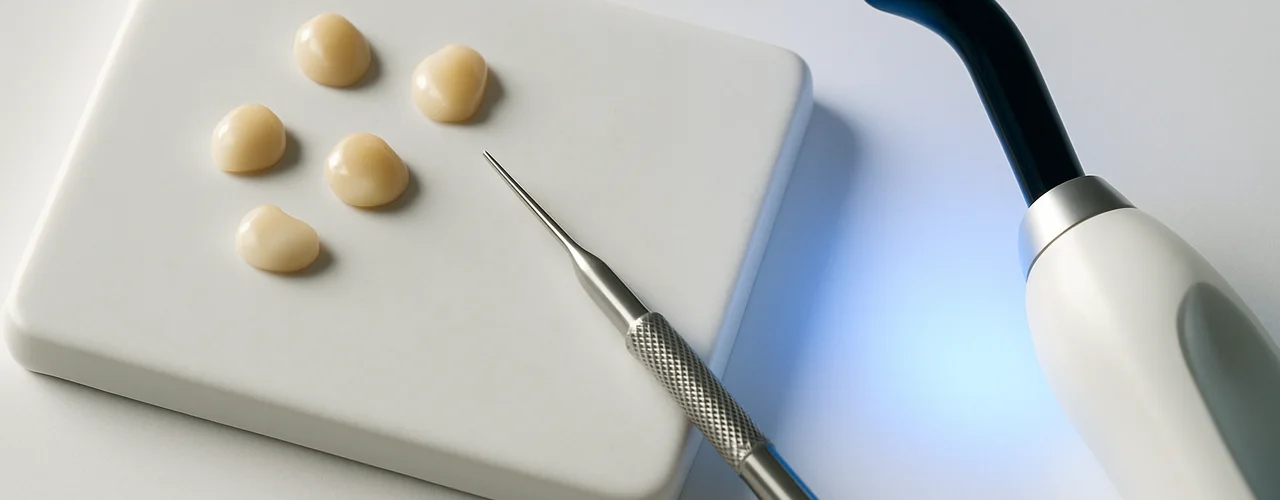
For decades the debate over fillings was about mercury in silver amalgam. Today most fillings are tooth-colored composite resin, and a new question has emerged: do white fillings expose you to BPA? The honest answer is nuanced. This guide from Molar City, an independent dental tourism platform since 2007, explains the chemistry, what the evidence shows and what options exist if you prefer to minimize exposure.
What BPA is and how it connects to fillings
Bisphenol A (BPA) is an industrial chemical used to make polycarbonate plastics and epoxy resins. It can act weakly like estrogen in the body, which is why it is restricted in baby bottles in many countries.
Dental composites are not made of BPA. They are a mix of glass or ceramic filler particles held in a resin matrix. The issue is that several common resin monomers are derived from BPA:
- Bis-GMA (bisphenol A-glycidyl methacrylate), the most widely used composite resin, synthesized from BPA.
- Bis-DMA, used in some sealants and adhesives, which can break down into BPA in saliva.
- Bis-EMA, another BPA-based monomer found in some products.
Trace BPA can be present as an impurity or released through degradation, mostly in the hours right after placement.
What the research says
Studies that measured BPA in saliva after composite or sealant placement generally found a short spike in the first hours, returning close to baseline within about a day. The amounts measured were far below the tolerable daily intake set by food-safety regulators. Major dental organizations, including the ADA, consider composites safe and note that daily BPA exposure from food packaging and receipts is typically much larger.
At the same time, some researchers and biological dentists argue that the precautionary principle makes sense for pregnant women, young children and people who want to minimize total endocrine-disruptor exposure. Both views agree on one practical point: how a filling is placed affects how much unreacted monomer is left.
BPA-free and lower-exposure options
| Option | BPA-derived resin? | Pros | Cons |
|---|---|---|---|
| Bis-GMA-free composite (UDMA-based or similar) | No Bis-GMA | Same technique as standard composite, good esthetics | Fewer brands, ask by name |
| Glass ionomer / resin-modified glass ionomer | Conventional glass ionomer contains no Bis-GMA | Releases fluoride, bonds chemically | Less wear resistant, best for small or root-surface fillings |
| Ceramic inlay or onlay | Ceramic itself none; thin resin cement | Very little exposed resin, durable | Higher cost, removes a bit more tooth |
| Standard Bis-GMA composite | Yes | Most studied, widely available | Trace BPA possible right after placement |
For larger restorations, a ceramic inlay or onlay minimizes the volume of resin in your mouth, because only a thin layer of cement is used.
How careful technique reduces residual monomers
Whatever material is chosen, these steps reduce unreacted resin:
- Rubber dam isolation keeps saliva out and improves curing.
- Thin layers, fully cured with a properly maintained curing light.
- Removing the oxygen-inhibited layer, the slightly sticky surface film, by polishing or curing under glycerin gel.
- Rinsing and gargling right after placement, which removes much of the surface monomer.
It is reasonable to ask your dentist which composite brand they use, whether it contains Bis-GMA, and whether they polish and rinse after placement.
A note on biocompatibility testing
Some biological dentists offer serum compatibility tests to help choose materials. These tests are not part of mainstream standards and their predictive value is debated, but some patients with sensitivities find them reassuring. Read our sibling article on dental material biocompatibility testing for a balanced look.
Replacing amalgam with composite
Most people asking about BPA-free fillings are replacing old silver amalgams. If so, how the amalgam comes out matters as much as what goes in. See our guide on safe amalgam removal in Mexico, and the overview in our holistic dentist in Tijuana guide.
Filling prices in Tijuana vs the USA
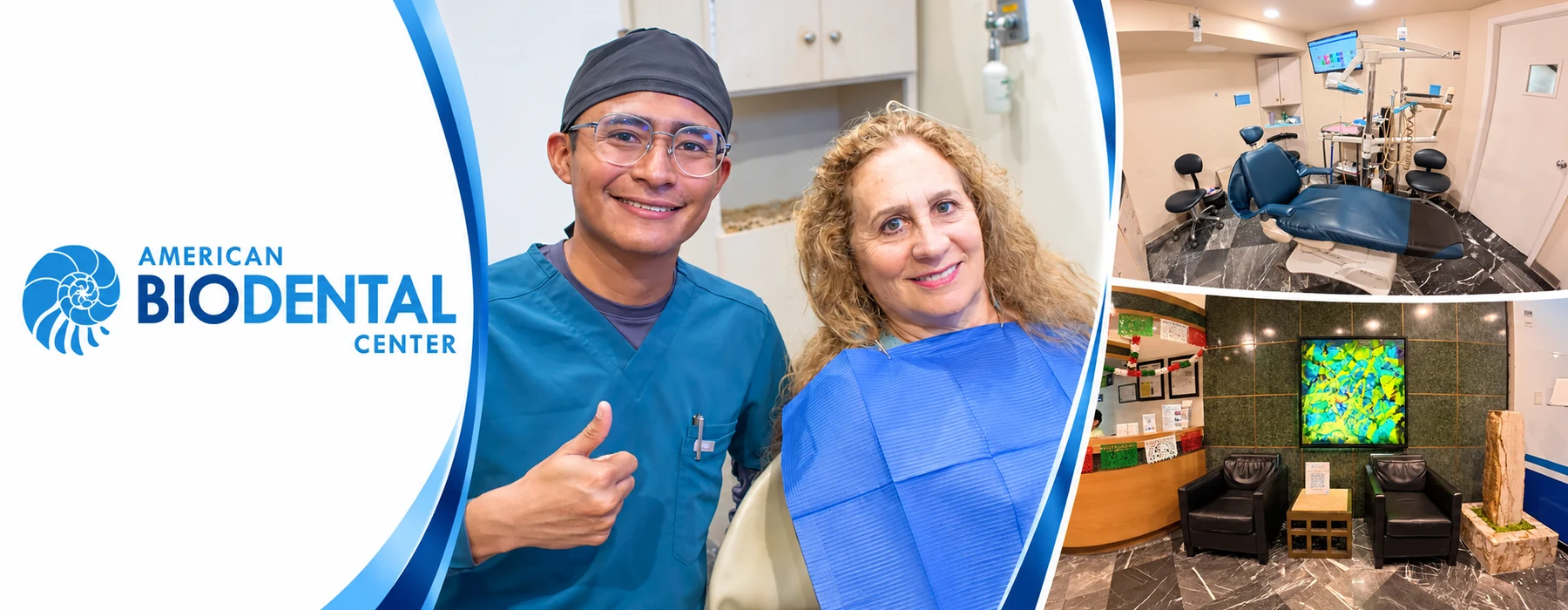
In Tijuana, the biological clinic American Biodental Center (founded 1998) publishes these prices. Ask any clinic which composite brand is included in the price.
| Treatment | Published price, American Biodental Center (USD) | Typical US range (USD) |
|---|---|---|
| Composite (resin) filling | $80 | $150 - $350 |
| Amalgam removal (per tooth) | $100 | $100 - $300 |
| Cosmetic bonding | $180 | $300 - $600 |
| Ceramic inlay | $400 | $650 - $1,200 |
| Exam | $40 | $75 - $200 |
Compare clinics across the city in our Tijuana dentist guide.
This article is educational and does not replace professional advice. Consult your dentist about which filling material is right for you.
Sealants, children and pregnancy
Dental sealants, the thin coatings painted into children's molar grooves, are where BPA questions first arose, because some older sealants contained Bis-DMA. Today many sealant brands are formulated without Bis-DMA, and several are marketed as BPA-free. Sealants remain one of the most effective ways to prevent cavities in children, so the usual advice is not to skip them but to ask for a product without Bis-DMA and to have the child rinse right after placement.
For pregnant or breastfeeding patients, urgent fillings should not be postponed because of BPA concerns: untreated infection carries its own risks. Elective cosmetic bonding can reasonably wait. If you are replacing many fillings at once, spreading the work over several visits also limits how much fresh resin is placed in a single day.
Frequently asked questions
Do white fillings contain BPA?
Composites are not made of BPA, but many contain resins such as Bis-GMA that are synthesized from it. Trace BPA may be released, mostly in the first hours after placement, at levels far below regulatory safety limits.
Are BPA-free composites as durable as regular ones?
Several Bis-GMA-free composites based on UDMA and other monomers perform well in lab and clinical testing. Durability depends more on the cavity size, the bonding technique and your bite than on the absence of Bis-GMA.
Is glass ionomer a good BPA-free alternative?
Conventional glass ionomer contains no Bis-GMA and releases fluoride, but it is less wear resistant. It works well for small fillings, root surfaces and children, less well for large chewing surfaces.
Should pregnant women avoid composite fillings?
Dental organizations consider necessary dental treatment safe during pregnancy. Some dentists prefer to delay elective fillings or use Bis-GMA-free materials as a precaution. Discuss timing and materials with your dentist and obstetrician.
How much does a composite filling cost in Tijuana?
American Biodental Center publishes $80 for a composite filling, while US prices usually run $150 to $350 depending on size and location.
Frequently Asked Questions
Do white composite fillings contain BPA?
Are BPA-free composite fillings available?
How can I minimize exposure to residual monomers from fillings?
How much do composite fillings cost in Tijuana?
Are composite fillings safer than amalgam?
Questions this page answers
- are white composite fillings safe
- do composite fillings contain BPA
- BPA-free dental fillings in Mexico
- Bis-GMA free fillings Tijuana
- how much do composite fillings cost in Tijuana
- biological dentist in Tijuana for BPA-free fillings
- mercury-free vs composite fillings
- is it safe to get dental fillings in Mexico
- best dentist in Tijuana for white fillings
- dental fillings without BPA near the border