Every filling, crown and implant puts a material in contact with your body for years. Most people tolerate modern dental materials without any problem. A small number react — usually with local irritation, sometimes with a documented allergy. Biocompatibility testing tries to identify those reactions before treatment rather than after.
This article explains the main tests, how much weight their results deserve, and who might reasonably consider them. It is part of our holistic dentistry guide.
The main types of tests
| Test | What it measures | Status |
|---|---|---|
| Patch testing (dermatology) | Skin reaction to small amounts of metals and resin components over 48–96 hours | Standard, validated method for contact allergy |
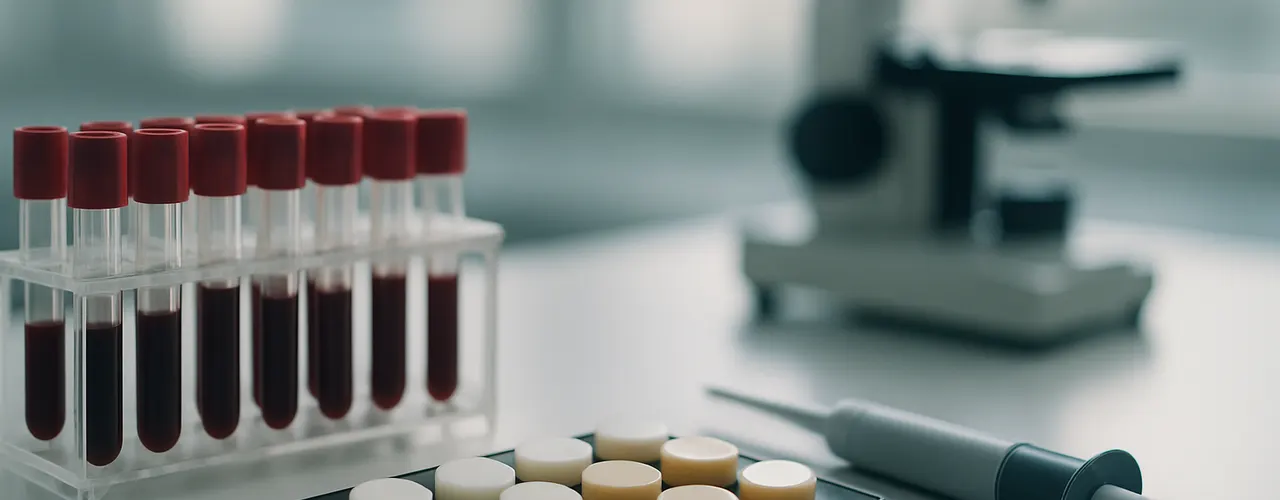
| MELISA / lymphocyte transformation tests | Whether your white blood cells react to specific metals in a lab | Used in Europe; validity debated; not widely accepted in the US |
| Serum compatibility tests (e.g. Clifford CMRT) | Antibody reactions in blood serum to chemical groups found in dental materials; produces a list of "suitable" products | Popular in biological dentistry; limited independent validation |
| Applied kinesiology / muscle testing | Muscle strength while holding a material | Not scientifically supported; not recommended |
If you have a history of allergies, a patch test performed by an allergist or dermatologist is the most established starting point. It reliably detects contact allergy to metals such as nickel, cobalt, chromium, palladium and mercury, and to resin components such as methacrylates.
How reliable are the results?
This is where honesty matters. Patch testing has decades of validation for contact allergy, but even it can miss reactions that only occur inside the mouth. Blood-based tests such as MELISA and serum compatibility panels have far less independent research; results can vary between labs, and a "reactive" result does not prove a material would cause symptoms in practice.
That does not make them useless. Some patients and dentists use them as one input when choosing between several otherwise equivalent materials. The key is to avoid treating a lab printout as a diagnosis, and never to remove sound dental work solely because of a borderline result.
Who may benefit from testing?
- People with known metal allergies (for example, reactions to jewelry, watch backs or orthopedic implants).
- People with multiple chemical sensitivities or a history of reactions to dental materials.
- Patients planning extensive restorations — many crowns, implants or a full replacement after amalgam removal.
- Patients choosing between zirconia and titanium implants who have a history suggesting metal sensitivity.
- People with lichenoid reactions (white, lacy patches) next to existing fillings, which may indicate a local reaction.
For most patients without such a history, testing is optional. Choosing well-established, metal-free materials is often enough.
Materials generally considered most biocompatible
- Zirconia (implants, crowns): inert ceramic, very low reported reaction rates.
- Lithium disilicate (E.max) and feldspathic porcelain: glass-ceramics with a long safety record. See metal-free crowns compared.
- Composite resins: very common; a small number of people react to methacrylate components. BPA-free composites are preferred by many biological dentists.
- Titanium: very well tolerated in most people; true allergy appears rare.
How testing fits into a treatment plan
- Discuss your history with your dentist and, ideally, your physician or allergist.
- Choose the test: patch testing for suspected allergy; a serum or lymphocyte test only if you and your dentist agree it adds useful information.
- Allow time: blood tests are usually sent to specialized labs in the US or Europe and take 1–3 weeks, so do them before you travel for treatment.
- Share results with the clinic so they can select brands and cements accordingly.
Typical costs
Test prices are set by laboratories and allergists, not by dental clinics, and change over time. As a rough guide: patch testing through an allergist is often covered partly by medical insurance; serum compatibility panels and MELISA tests commonly cost a few hundred dollars per panel. Ask the lab for current pricing.
The restorations themselves are where Mexico saves money. Prices published by American Biodental Center in Tijuana (USD):
| Restoration | Tijuana (published by the clinic) | Typical US range |
|---|---|---|
| BPA-free composite filling | $80 | $150 – $400 |
| Ceramic inlay / onlay | $400 / $450 | $800 – $1,700 |
| Porcelain crown | $550 | $1,200 – $2,000 |
| Zirconia implant + abutment + crown | $2,500 | $4,500 – $7,000 |
If you already have test results, send them to the clinic with your X-rays when requesting a quote. American Biodental Center focuses on mercury-free, metal-free restorations and can advise on options; compare other clinics in our Tijuana dentist guide.
Warning signs to watch for
Testing is a legitimate tool when used carefully, but it can also be used to sell unnecessary treatment. Be cautious if:
- A test result is used to recommend removing all existing dental work, including healthy crowns and fillings.
- Muscle testing or electrodermal "screening" is presented as a diagnosis.
- You are told the results prove that a material causes a specific systemic disease.
- Only one brand or lab is acceptable, and it happens to be sold by the clinic.
A balanced dentist will explain the limits of each test, offer reasonable material choices and respect your decision.
Frequently asked questions
Do I need a biocompatibility test before dental work?
Most patients do not. Testing makes the most sense if you have known metal allergies, past reactions to dental materials or multiple chemical sensitivities, or you are planning extensive restorations. Discuss it with your dentist.
What is the most reliable dental allergy test?
Patch testing by an allergist or dermatologist is the most established method for detecting contact allergy to metals and resin components. Blood-based tests are used in biological dentistry but have less independent validation.
Can I be allergic to zirconia?
Reactions to zirconia are extremely rare, which is why it is often chosen for sensitive patients. Reactions are more commonly linked to cements, resins or metals used alongside it.
How long do biocompatibility test results take?
Patch tests take two to four days. Serum and lymphocyte tests are usually sent to specialized labs and take one to three weeks, so plan them well before a dental trip.
Should I remove dental work if a test shows a reaction?
Not automatically. A lab result alone does not prove a material is causing harm. Consider removal only together with clinical signs, such as local inflammation, and with advice from your dentist and physician.
Frequently Asked Questions
What is dental material biocompatibility testing?
Who should consider biocompatibility testing before dental work?
How reliable are dental biocompatibility tests?
How much does dental biocompatibility testing cost?
Can I use biocompatibility test results with a dentist in Mexico?
Questions this page answers
- dental material biocompatibility testing who needs it
- Clifford test vs MELISA test for dental materials
- how much does dental biocompatibility testing cost
- metal-free dentist in Mexico
- is dental work in Mexico safe for sensitive patients
- best dentist in Tijuana for metal-free crowns
- dental patch test for mercury allergy
- affordable biocompatibility testing for dental implants
- dentist near Arizona border for metal-free dentistry
- how to find a mercury-free dentist in Los Algodones