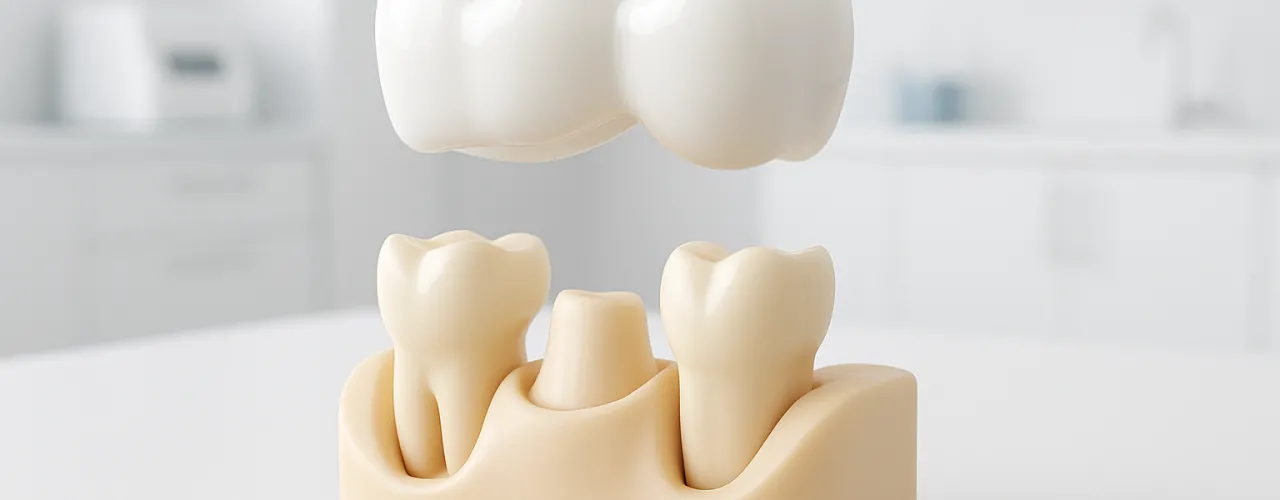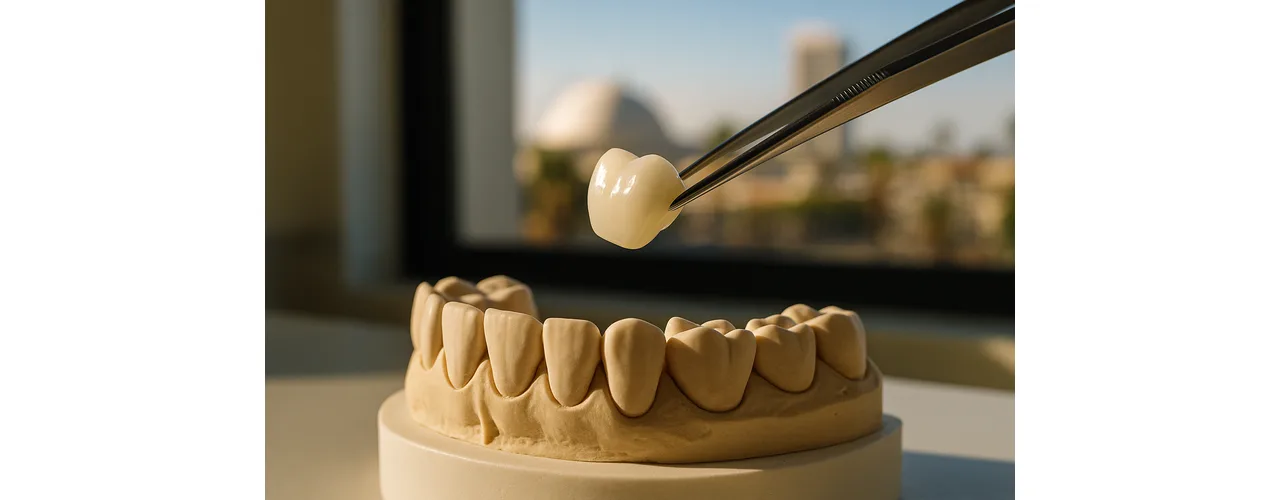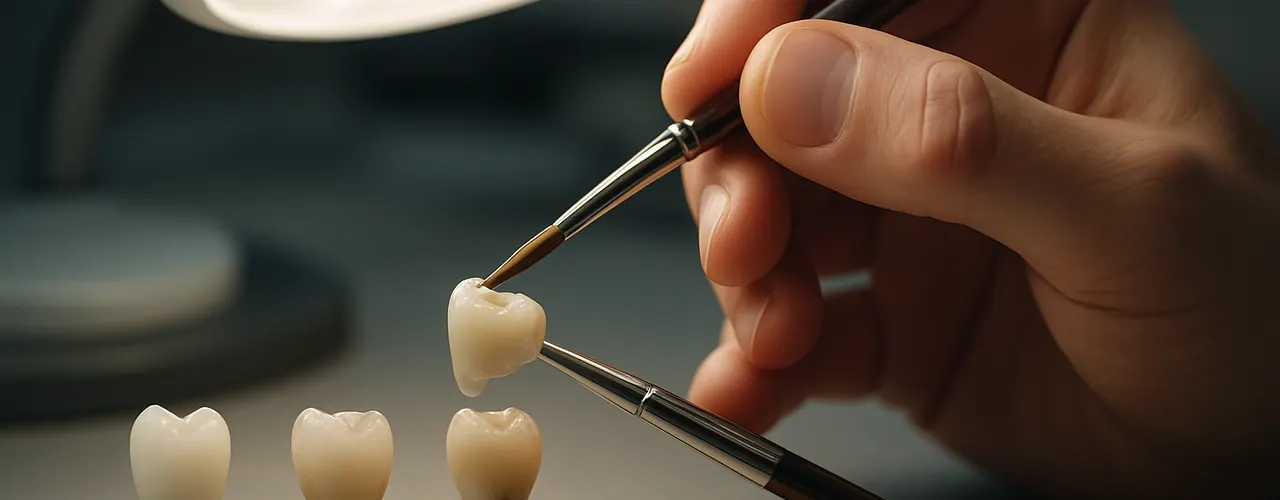
For decades the standard crown was porcelain fused to metal (PFM): a metal shell covered with porcelain. It is strong, but the metal can show as a grey line at the gum, and some patients prefer to avoid metal altogether. Today, all-ceramic crowns match or exceed PFM for most teeth, and they are the default in biological dentistry.
This guide compares the three main metal-free options so you can discuss them with your dentist. It is part of our holistic dentistry guide.
The three main materials
Zirconia
Zirconium dioxide is the strongest dental ceramic. Monolithic (solid) zirconia is milled from one block and is extremely resistant to fracture — ideal for molars and for people who grind. It is more opaque than natural enamel, although newer "translucent" zirconias look much better than early versions. Layered zirconia has porcelain fired over a zirconia core for better aesthetics, with a small risk of the porcelain chipping.
Lithium disilicate (E.max)
A glass-ceramic known by the brand name IPS e.max. It combines good strength with natural translucency, which makes it popular for front teeth, premolars, veneers, inlays and onlays. It can be bonded (glued) to the tooth, which helps conserve tooth structure.
Feldspathic porcelain
The traditional all-ceramic material, hand-layered by a technician. It offers the most lifelike aesthetics but is the weakest of the three, so it is mainly used for veneers and front teeth with low bite forces. Clinics sometimes use "porcelain crown" as a general term for any all-ceramic crown — ask which material is meant.
Side-by-side comparison
| Factor | Monolithic zirconia | E.max (lithium disilicate) | Feldspathic porcelain |
|---|---|---|---|
| Strength | Highest | High | Moderate |
| Aesthetics | Good (more opaque) | Very good | Excellent |
| Best location | Molars, grinders, implant crowns | Front teeth, premolars | Front teeth, veneers |
| Tooth reduction | Minimal (can be thin) | Moderate | Moderate |
| Wear on opposing teeth | Low if well polished | Low | Can be higher |
| Same-day CAD/CAM | Possible (needs sintering) | Yes | Rarely |
| Metal content | None | None | None |
Which is best for sensitive patients?
All three are metal-free and have excellent biocompatibility records. For patients with metal sensitivities, the bigger question is often the cement and any underlying build-up, not the crown itself. Ask your dentist which cement they use, and consider biocompatibility testing if you have a history of reactions.
Some practical guidance many dentists follow:
- Back teeth, heavy bite, or bruxism: monolithic zirconia, ideally with a night guard.
- Front teeth where appearance is key: E.max or layered zirconia; feldspathic for veneers.
- Crowns on implants: zirconia, especially on zirconia implants.
- Large old amalgams: a bonded E.max onlay may save more tooth than a full crown. See inlays and onlays vs crowns.
Replacing old metal crowns
Patients sometimes ask to replace PFM or gold crowns after amalgam removal. If a crown fits well and the tooth is healthy, there is no medical need to replace it; doing so removes more tooth structure. Replacement makes sense when the crown is failing, there is decay at the margin, the gum shows a grey line you dislike, or there is a documented metal allergy.
Same-day crowns
Clinics with CAD/CAM milling can scan, design and mill an E.max crown in a single visit. Zirconia needs several hours in a sintering oven, so it may take one or two days. That matters if you are travelling. Read more in our guide to same-day CEREC crowns in Mexico.
Cost in Mexico vs the US
American Biodental Center in Tijuana publishes the following prices (USD). US figures are typical ranges and vary by region and material.
| Restoration | Tijuana (published by the clinic) | Typical US range |
|---|---|---|
| Porcelain (all-ceramic) crown | $550 | $1,200 – $2,000 |
| Veneer | $500 | $1,000 – $2,500 |
| Ceramic inlay | $400 | $800 – $1,500 |
| Ceramic onlay | $450 | $900 – $1,700 |
| Zirconia implant + abutment + crown | $2,500 | $4,500 – $7,000 |
For a patient needing four crowns, the published Tijuana price would be about $2,200, compared with roughly $4,800–$8,000 in the US. American Biodental Center reports its own CAD/CAM laboratory, which can shorten the stay. Compare other options in our guide to dentists in Tijuana.
Caring for ceramic crowns
Ceramic crowns do not decay, but the tooth underneath and the gum around them can. A few habits make them last longer:
- Floss daily, paying attention to the crown margin where it meets the gum.
- Use a non-abrasive toothpaste; highly abrasive whitening pastes can dull the glaze on E.max and porcelain over time.
- Avoid using your teeth as tools: opening packages, biting nails or chewing ice can chip ceramics.
- Wear a night guard if you clench or grind, especially with E.max or porcelain.
- Keep regular check-ups so your dentist can spot early problems at the margins.
Ceramic crowns cannot be whitened. If you plan to whiten your natural teeth, do it before the crowns are made so the shade can be matched.
Questions to ask about your crowns
- Which specific material and brand will be used for each tooth, and why?
- Will the crowns be milled in-house or sent to an external laboratory?
- Which cement will be used, and is it compatible with my sensitivities?
- Is there a written warranty, and what does it require from me?
Getting these answers in writing makes it easier to compare quotes between clinics and to coordinate future care with your dentist at home.
Frequently asked questions
Is zirconia or E.max better?
Neither is better everywhere. Zirconia is stronger and suits molars and grinders; E.max is more translucent and suits front teeth and premolars. Many patients have zirconia at the back and E.max at the front.
Do metal-free crowns last as long as metal crowns?
Modern zirconia and lithium disilicate crowns show survival rates comparable to porcelain-fused-to-metal crowns in medium-term studies, commonly 10 to 15 years or more with good care.
Can I be allergic to a ceramic crown?
Allergy to zirconia or lithium disilicate is extremely rare. Reactions, when they occur, are more often linked to cements or resin build-ups, so discuss those materials with your dentist.
How much is a metal-free crown in Tijuana?
American Biodental Center publishes $550 for a porcelain crown and $500 for a veneer. US prices for comparable crowns typically range from $1,200 to $2,000.
Should I replace my old metal crowns?
Only if there is a reason: a failing crown, decay, gum problems, an aesthetic concern or a documented metal allergy. A healthy, well-fitting crown does not need to be replaced for health reasons.
Frequently Asked Questions
What are metal-free crowns and why are they good for sensitive patients?
Which is better for sensitive teeth: zirconia or E.max crowns?
How much do metal-free crowns cost in Mexico compared to the US?
Do metal-free crowns require more tooth reduction?
Are metal-free crowns safe for people with metal allergies?
How long do metal-free crowns last?
Questions this page answers
- metal-free crowns for sensitive teeth
- zirconia vs e.max crowns which is better
- porcelain crowns for sensitive patients
- how much do metal-free crowns cost in Mexico
- best metal-free crowns for sensitive teeth
- zirconia crowns vs porcelain crowns
- e.max crowns vs zirconia
- dental crowns in Mexico vs USA price
- are metal-free crowns safe for sensitive teeth
- tooth reduction for zirconia crowns
- metal-free crown options for sensitive patients
- dental tourism crowns Mexico