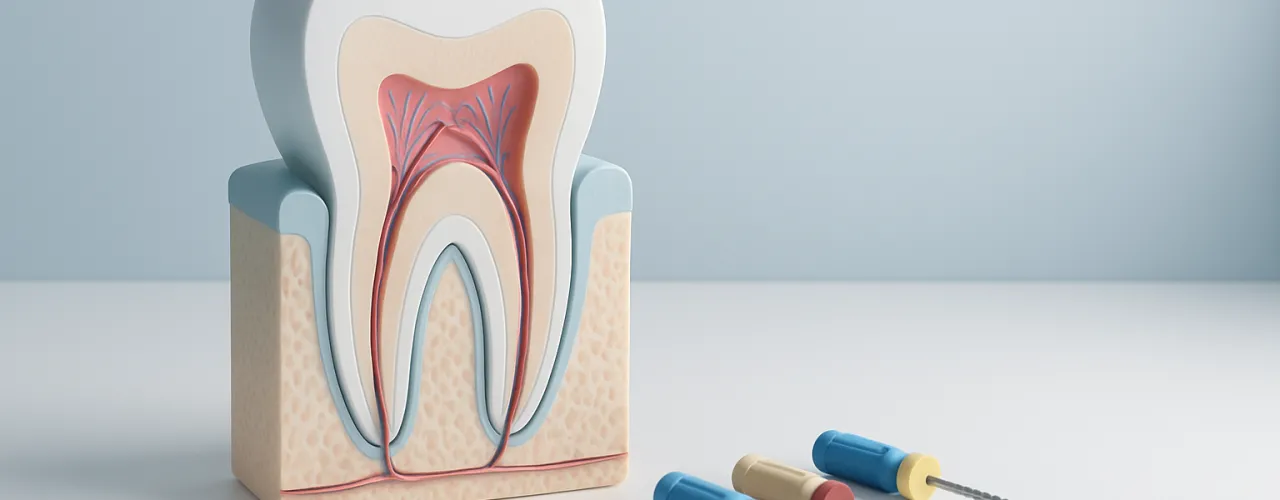
Silver-colored "amalgam" fillings are roughly half elemental mercury bound with silver, tin and copper. They have been used for more than 150 years and millions of people still have them. When an amalgam is drilled out, it releases a burst of mercury vapor and fine particles — which is why biological dentists use a dedicated safe removal protocol.
This guide explains that protocol step by step, who might benefit, what health authorities say, and what it costs in Mexico. It is part of our holistic dentistry guide.
Should amalgam fillings be removed at all?
This is the first question to answer honestly. The US Food and Drug Administration (FDA) and the American Dental Association (ADA) state that intact amalgam fillings are safe for most adults, and they do not recommend removing sound fillings solely because they contain mercury. Removing a healthy filling also removes healthy tooth structure and briefly increases mercury exposure.
In 2020 the FDA updated its guidance to recommend that certain higher-risk groups avoid new amalgam fillings when appropriate alternatives exist: pregnant or nursing women, women planning pregnancy, children under six, people with kidney impairment, neurological conditions or a known mercury allergy.
Common, reasonable reasons to replace an amalgam include:
- The filling is cracked, leaking or has decay underneath.
- The tooth around it is fractured (large amalgams can wedge cusps apart over time).
- You have a documented allergy or sensitivity to mercury or other metals.
- You want a tooth-colored restoration and your dentist agrees it is appropriate.
Claims that removing amalgams will cure chronic illness are not supported by high-quality evidence. Discuss your situation with your dentist and physician.
The SMART protocol, step by step
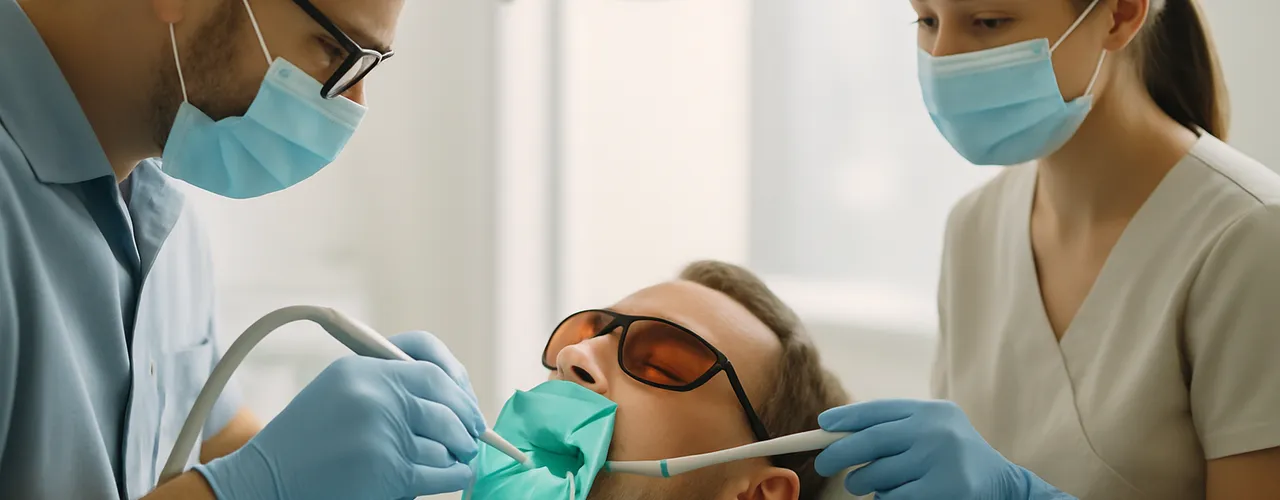
The IAOMT's Safe Mercury Amalgam Removal Technique (SMART) is the protocol most biological dentists follow. Its aim is to minimize mercury vapor and particle exposure for you, the dental team and the environment.
- Room filtration: a high-volume air purifier or extraoral suction placed near the mouth.
- Patient protection: a full-body or face drape, eye protection and an alternative air source (nasal oxygen or a nasal mask) so you are not breathing room air over the work site.
- Rubber dam: a latex-free dam isolates the tooth so particles do not reach the throat or gums. Some offices add a saliva ejector under the dam.
- High-volume suction: a suction tip (often a "clean-up" device) held right next to the tooth.
- Cool water and sectioning: the filling is cut into chunks with a carbide bur and plenty of water, then removed in pieces rather than ground into dust.
- Rinse and clean up: the mouth is rinsed thoroughly, gloves and drapes changed.
- Waste handling: amalgam separators capture particles so mercury does not go down the drain.
Some clinics also offer activated charcoal or chlorella rinses before or after. These are optional and evidence for them is limited; ask the dentist what is included and why.
What replaces the amalgam?
Once the old filling is out, the tooth is restored with a metal-free material. The choice depends on how much tooth remains:
- Composite resin for small and medium cavities, ideally BPA-free composites.
- Ceramic inlays or onlays when a large amalgam leaves thin walls — see inlays and onlays vs crowns.
- A full ceramic crown when a cusp is cracked; read our guide to metal-free crowns.
Patients who are concerned about reactions to the new material sometimes request biocompatibility testing first.
How long does it take?
Most dentists replace amalgams by quadrant (one quarter of the mouth per session). A patient with 6–10 fillings can often finish in 2–3 days. Inlays and onlays may add a day if milled in-house with CAD/CAM, or several days if made in an external lab. Some biological dentists prefer a specific order of removal; there is no strong evidence that sequence matters, so do not feel pressured if it extends your trip.
How much does safe amalgam removal cost in Mexico?
As a reference, American Biodental Center in Tijuana publishes the following prices (USD). US prices are typical ranges and vary by region.
| Item | Tijuana (published by the clinic) | Typical US range |
|---|---|---|
| Safe amalgam removal (per filling) | $100 | $150 – $400 |
| BPA-free composite filling | $80 | $150 – $400 |
| Ceramic inlay | $400 | $800 – $1,500 |
| Ceramic onlay | $450 | $900 – $1,700 |
| Porcelain crown | $550 | $1,200 – $2,000 |
A worked example: replacing six amalgams with composites at those published prices would be about 6 × ($100 + $80) = $1,080, before any crowns or extras. The same work at a US biological office often runs $2,000 to $4,500.
Where to have it done in Tijuana
American Biodental Center has offered mercury-free dentistry since 1998 and reports IAOMT affiliation, in-house CBCT and a CAD/CAM lab for same-trip inlays and onlays. You can compare it with other clinics in our Tijuana dentist guide. Whatever clinic you choose, ask them to describe their removal protocol in detail before booking.
Frequently asked questions
Is it dangerous to remove amalgam fillings?
Drilling an amalgam briefly releases mercury vapor. Under a safe removal protocol (rubber dam, high-volume suction, water cooling, alternative air) that exposure is reduced substantially. For most healthy adults the short-term exposure is considered low, but the protocol is a sensible precaution.
Can I remove my amalgams while pregnant?
Most dentists and health authorities advise postponing elective amalgam removal during pregnancy and breastfeeding, unless a filling is broken or causing problems. Talk to both your dentist and your obstetrician.
Does insurance cover amalgam removal in Mexico?
US dental insurance rarely covers treatment abroad directly, but some plans reimburse part of the cost if you submit an itemized receipt. Replacing a broken filling is more likely to be reimbursed than removing a healthy one for elective reasons.
Will I feel better after removing my fillings?
Some patients report feeling better, but there is no high-quality evidence that amalgam removal cures systemic symptoms. Go in expecting healthier, metal-free restorations, not a medical cure.
How many fillings can be replaced in one visit?
Typically one quadrant per appointment, so four to eight fillings a day is common. Your dentist will adjust the plan to your comfort and the size of each restoration.
Frequently Asked Questions
What is the SMART protocol for mercury amalgam removal?
Is safe mercury amalgam removal in Mexico safe?
How much does mercury amalgam removal cost in Mexico compared with the US?
How long does safe amalgam removal take?
What do the FDA and ADA say about mercury fillings?
Who should consider safe mercury amalgam removal?
Questions this page answers
- how much does safe mercury amalgam removal cost in Mexico
- is it safe to get mercury fillings removed in Mexico
- SMART protocol amalgam removal dentist in Mexico
- best biological dentist in Mexico for amalgam removal
- mercury filling removal near the US border
- does the IAOMT have dentists in Mexico
- what is the SMART protocol for mercury removal
- is amalgam removal in Mexico cheaper than the US
- how long does safe amalgam removal take
- what does the FDA say about mercury fillings
- should I remove my mercury fillings
- mercury-free dentist in Los Algodones or Tijuana