Ozone (O3) is a highly reactive form of oxygen that kills bacteria, viruses and fungi on contact. Biological dentists use it as a disinfectant during fillings, extractions and gum treatment, often as an alternative or complement to conventional antiseptics. It is also one of the most overstated tools in holistic dentistry, so it is worth separating what is known from what is marketing.
This guide is part of our holistic dentistry guide.
How ozone is used in the dental chair
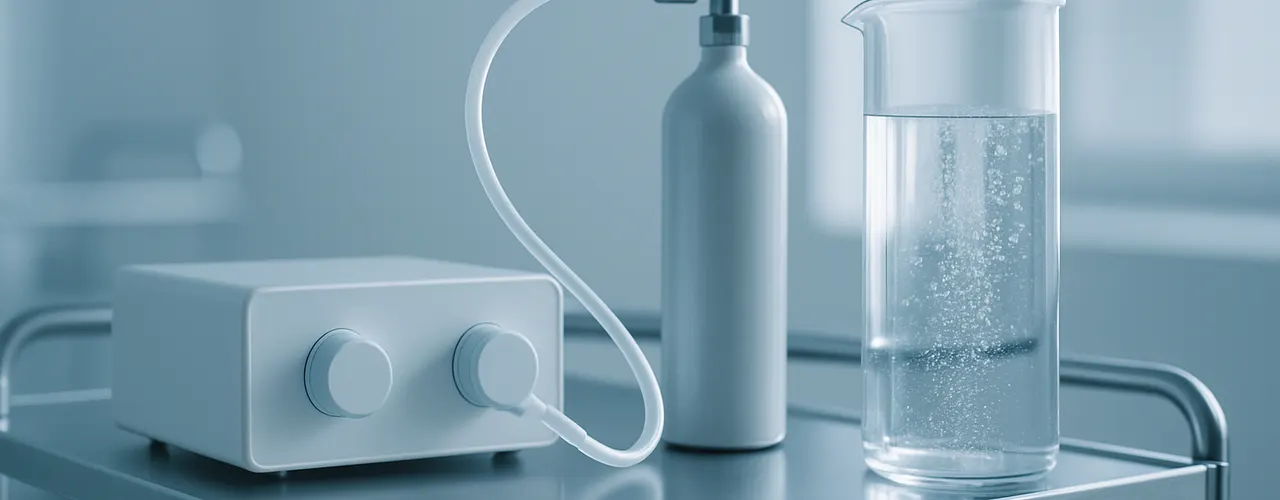
Dental ozone comes from a medical generator that converts pure oxygen into an oxygen–ozone mixture. It is delivered in three main forms:
- Ozone gas, applied through a sealed silicone cup over a tooth or blown into a cavity or socket.
- Ozonated water, used as a rinse or surgical irrigant.
- Ozonated oil, applied to gums, ulcers or extraction sites.
Ozone gas must never be inhaled, which is why it is applied in sealed systems or with strong suction.
Common dental uses
| Use | How ozone is applied | Strength of evidence |
|---|---|---|
| Early cavities (non-cavitated) | Gas via sealed cup | Mixed; reviews find insufficient evidence it reverses decay on its own |
| Disinfecting a cavity before filling | Gas or water | Strong lab antimicrobial effect; limited clinical outcome data |
| Extraction and surgical sites | Water irrigation, gas | Some studies show less pain and faster healing; evidence moderate to low |
| Gum disease (adjunct to cleaning) | Water or gas in pockets | Some short-term benefit reported; not superior to standard care in all studies |
| Root canal disinfection | Gas or water | Lab support; less effective than sodium hypochlorite in several studies |
| Mouth ulcers, sensitivity | Oil or gas | Small studies, generally positive |
In short: ozone is a genuine, effective disinfectant in the lab, and it is reasonably safe when used correctly in the mouth. What remains unproven is that it produces better clinical results than standard methods for most conditions, or that it can replace a filling for an established cavity.
What ozone cannot do
- It does not reverse established cavities; decayed tooth structure still needs to be removed and restored.
- It does not cure systemic illness. Claims about "ozone detox" through the mouth are not supported by evidence.
- It does not replace good brushing, flossing and professional cleanings.
Some clinics also offer systemic ozone therapies (such as ozonated blood, "major autohemotherapy") through an associated medical clinic. These are medical, not dental, procedures; the US FDA does not approve ozone for any medical use, and their evidence base is very limited. Discuss them with your physician before considering them.
Safety
In dentistry, ozone is applied locally in small concentrations. Side effects are rare when equipment is used correctly. The main risk is inhalation, which can irritate the lungs; that is why proper suction and sealed delivery matter. People with certain conditions (such as uncontrolled hyperthyroidism, G6PD deficiency or pregnancy) should mention them; many dentists avoid ozone in these cases as a precaution.
Where ozone fits in a biological treatment plan
You will most often see ozone used as one step in a larger procedure:
- Irrigating the socket during a holistic extraction.
- Cleaning the site during cavitation surgery.
- Paired with PRF to support healing.
- Disinfecting a prepared tooth after amalgam removal, before a composite or inlay.
Cost in Mexico vs the US
American Biodental Center in Tijuana publishes a combined price for PRP/ozone applications. US prices are typical ranges and vary widely; many US offices charge $50–$150 for a simple ozone application and more when combined with surgery.
| Item | Tijuana (published by the clinic) | Typical US range |
|---|---|---|
| PRP / ozone (per application) | $100 | $50 – $500 |
| Extraction with cavitation cleaning | $200 | $300 – $900 |
| Cavitation surgery (per site) | $180 | $800 – $2,500 |
| BPA-free composite filling | $80 | $150 – $400 |
American Biodental Center uses ozone routinely in surgical and restorative procedures. Ask any clinic whether ozone is included in a procedure price or billed separately, and compare options in our guide to dentists in Tijuana.
Questions to ask a clinic that offers ozone
- What exactly will ozone be used for in my treatment? A clear answer ("to irrigate the extraction socket") is a good sign; vague promises about "detox" are not.
- Is it included in the procedure price? Some clinics bundle ozone into surgery; others charge per application.
- What equipment do you use? A medical-grade generator fed with pure oxygen, with sealed delivery and strong suction, is standard.
- What is the alternative? For most uses, a conventional antiseptic such as chlorhexidine or saline irrigation is the comparison. You should be able to decline ozone without affecting the rest of your care.
- Are there reasons I should avoid it? A careful clinic will ask about pregnancy, thyroid disease, G6PD deficiency and lung conditions.
Ozone is usually an inexpensive add-on. Treat it as a reasonable option rather than a deciding factor when choosing a clinic; the dentist's experience with the main procedure matters far more.
If you are unsure, ask the dentist to show you the device and explain how the gas is contained during your procedure. A confident, transparent answer is a good sign.
Frequently asked questions
Is dental ozone therapy safe?
Applied locally with proper equipment and suction, dental ozone has a good safety record. The main risk is inhaling the gas, which can irritate the airways, so it should only be used with sealed delivery or strong suction.
Can ozone heal a cavity without drilling?
Ozone may help disinfect very early, non-cavitated lesions alongside fluoride and good hygiene, but systematic reviews have not found reliable evidence that it reverses decay on its own. An established cavity still needs a filling.
Does ozone help after an extraction?
Some studies report less pain and faster soft tissue healing when ozone is used on extraction sites. The evidence is moderate to low quality, so it is best seen as an optional adjunct.
How much does dental ozone cost in Tijuana?
American Biodental Center publishes $100 per PRP/ozone application. In the US, ozone is often billed at $50 to $150 per application, or more when part of surgery.
Is ozone therapy FDA approved?
The FDA has not approved ozone as a medical treatment, and it regulates ozone generators as devices with strict limits. Dental use is generally local and off-label, which is one reason to choose an experienced dentist and ask about the evidence.
Frequently Asked Questions
What is ozone therapy in dentistry?
Is ozone therapy safe?
How much does ozone therapy cost in Mexico compared with the US?
Does ozone therapy really work for cavities and gum disease?
Can I get ozone therapy as part of dental tourism in Mexico?
Questions this page answers
- what is ozone therapy in dentistry
- how much does ozone dental treatment cost in Mexico
- is ozone therapy for teeth safe
- does ozone therapy work for gum disease
- ozone dental treatment vs US prices
- can ozone therapy heal cavities
- ozone therapy dentist in Los Algodones
- is ozone therapy covered by dental insurance
- ozone dental treatment near the border
- ozone therapy for dental surgery healing