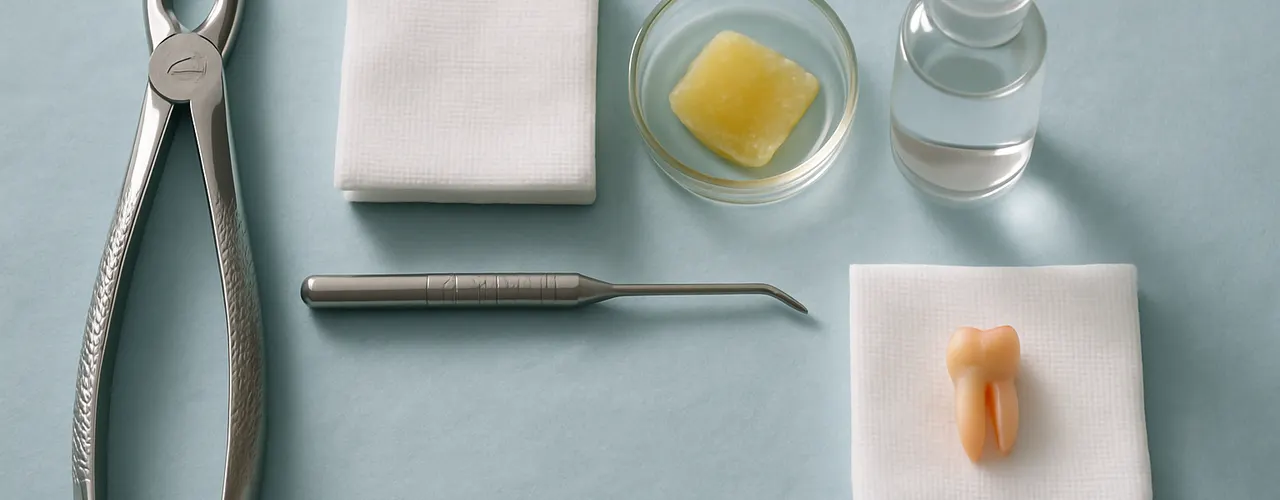
Every extraction ends the same way: the tooth comes out. What differs in a "holistic" or "biological" extraction is what happens to the socket afterwards. Biological dentists put extra emphasis on cleaning the socket and supporting bone healing, partly because of concerns about poorly healed sites (often called cavitations) later on.
This article explains the steps, how they compare with a standard extraction, and where the evidence is strong or thin. It is part of our holistic dentistry guide.
Standard vs holistic extraction at a glance
| Step | Standard extraction | Holistic / biological extraction |
|---|---|---|
| Imaging | 2D X-ray, CBCT for complex cases | CBCT commonly used |
| Anesthesia | Local, often with epinephrine | Local; some request epinephrine-free options |
| Tooth removal | Elevators and forceps | Same, with emphasis on preserving bone |
| Periodontal ligament | Usually left to resorb | Gently removed from the socket walls |
| Socket cleaning | Irrigation with saline | Debridement plus ozone irrigation |
| Healing support | Gauze, sometimes graft | PRF plugs or membranes, sometimes graft |
| Aftercare | Standard instructions | Standard instructions plus nutrition advice |
The steps of a biological extraction
1. Assessment and imaging
A CBCT scan shows root shape, nearby nerves and the sinus, which helps plan a less traumatic extraction. See why CBCT matters.
2. Atraumatic removal
The dentist uses periotomes and gentle luxation to loosen the tooth, sectioning multi-rooted teeth if needed, so the surrounding bone walls stay intact. This is good practice in any extraction, especially when an implant is planned.
3. Ligament removal and socket debridement
The periodontal ligament is the fibrous tissue that holds the tooth to the bone. Biological dentists remove its remnants and any infected tissue with curettes or a slow bur. The idea is to give new bone a clean surface to grow on. Thorough debridement of infected sockets is standard care; routinely removing the ligament from healthy sockets is a biological-dentistry practice with limited research behind it.
4. Ozone irrigation
Ozonated water or ozone gas is used to disinfect the socket. Lab studies show strong antimicrobial effects; clinical evidence for better outcomes is mixed. Read more in our guide to ozone therapy in dentistry.
5. PRF placement
A small blood sample is spun in a centrifuge to produce platelet-rich fibrin, which is placed in the socket as a plug. Studies suggest PRF can reduce pain and the risk of dry socket after wisdom tooth removal, and may improve soft tissue healing. See PRF and PRP in dentistry.
6. Closure and aftercare
Sutures if needed, gauze, and instructions. Some biological clinics also offer vitamin C or other IV therapy; these are optional and should not replace standard aftercare.
When does it make a difference?
- Before an implant: careful, bone-preserving extraction and socket preservation help any future implant, ceramic or titanium. See zirconia implants in Tijuana.
- Infected teeth: thorough debridement of an abscessed socket is important regardless of philosophy.
- Wisdom teeth: PRF has the best evidence here for comfort and dry socket prevention.
- Root canal teeth: patients who choose to remove a root-canal-treated tooth often prefer this approach; read root canal vs extraction: a holistic view before deciding, since a well-done root canal can last a lifetime.
Recovery tips
- Bite on gauze for 30–60 minutes; avoid rinsing hard for 24 hours.
- No smoking, vaping or straws for at least 72 hours to protect the clot.
- Cold packs for the first day, then warm compresses if swelling persists.
- Soft, nutrient-dense foods; stay hydrated.
- Call the clinic if pain increases after day three, or if you have fever or a bad taste — signs of infection or dry socket.
Cost in Mexico vs the US
Prices published by American Biodental Center in Tijuana (USD), compared with typical US ranges:
| Item | Tijuana (published by the clinic) | Typical US range |
|---|---|---|
| Extraction with cavitation cleaning | $200 | $300 – $900 |
| PRP / ozone (per application) | $100 | $150 – $500 |
| CBCT (one arch) | $140 | $250 – $600 |
| IV sedation | $250 | $500 – $900 |
American Biodental Center performs biological extractions with in-house CBCT and PRF. You can compare it with other clinics in our guide to dentists in Tijuana.
Who should take extra precautions
Any extraction, holistic or not, needs extra planning in some patients. Tell your dentist if you:
- Take blood thinners (warfarin, apixaban, rivaroxaban, clopidogrel or daily aspirin). Do not stop them on your own; your dentist and physician will coordinate.
- Take or have taken bisphosphonates or denosumab for osteoporosis or cancer, or have had radiation to the head and neck. These raise the risk of medication-related osteonecrosis of the jaw and may change the treatment plan.
- Have uncontrolled diabetes, a weakened immune system or a heart condition that requires antibiotic cover.
- Are pregnant; elective extractions are usually postponed, while urgent ones can often be done safely in the second trimester.
Because the extra socket cleaning adds a little time to the procedure, also mention if you have trouble keeping your mouth open for long; shorter appointments or sedation can help. A biological approach does not replace these medical precautions; it is added on top of them.
If an implant is planned, ask at the consultation whether the socket will be grafted at the time of extraction and how long you should wait before the implant. That single decision often determines how many trips you will need.
Frequently asked questions
Is a holistic extraction more painful?
Not usually. The extra cleaning takes a few more minutes under local anesthesia. Many patients report comparable or less discomfort afterwards, particularly when PRF is used.
Why remove the periodontal ligament?
Biological dentists believe leftover ligament can prevent complete bone fill. Debriding infected tissue is standard; routine ligament removal in healthy sockets has limited research, but it is low risk when done carefully.
Does a holistic extraction prevent cavitations?
Careful socket cleaning and PRF support good healing, but no technique can guarantee perfect bone fill. The concept of cavitations itself is debated; see our article on dental cavitations (NICO) for a balanced view.
How much does a biological extraction cost in Tijuana?
American Biodental Center publishes $200 for an extraction with cavitation cleaning, plus $100 for PRP or ozone if added. US biological offices typically charge several times more.
Can I fly home after an extraction?
Most patients can travel the next day after a simple extraction. Ask your dentist, especially after multiple extractions or sinus-area surgery, where a few days' wait may be recommended.
Frequently Asked Questions
What is a holistic tooth extraction?
How does a holistic extraction differ from a standard extraction?
Is a holistic tooth extraction more expensive?
What is PRF and why is it used?
Is ozone therapy safe during tooth extraction?
How long is recovery after a holistic tooth extraction?
Questions this page answers
- holistic tooth extraction vs standard extraction
- what is a biological tooth extraction
- how much does a holistic tooth extraction cost in Mexico
- best holistic dentist in Los Algodones
- PRF and ozone therapy for tooth extraction
- is holistic tooth extraction safe
- tooth extraction in Mexico for Americans
- dentist in Tijuana for holistic extraction
- recovery after holistic tooth extraction
- affordable tooth extraction near the border