Few decisions in dentistry generate as much debate as this one: when a tooth's nerve is infected or dying, should it be saved with a root canal or extracted and replaced, usually with an implant? Conventional dentists and many holistic dentists sometimes give different answers. This guide from Molar City, an independent dental tourism platform since 2007, lays out both perspectives and the evidence, so you can have an informed conversation with your dentist.
What a root canal actually does
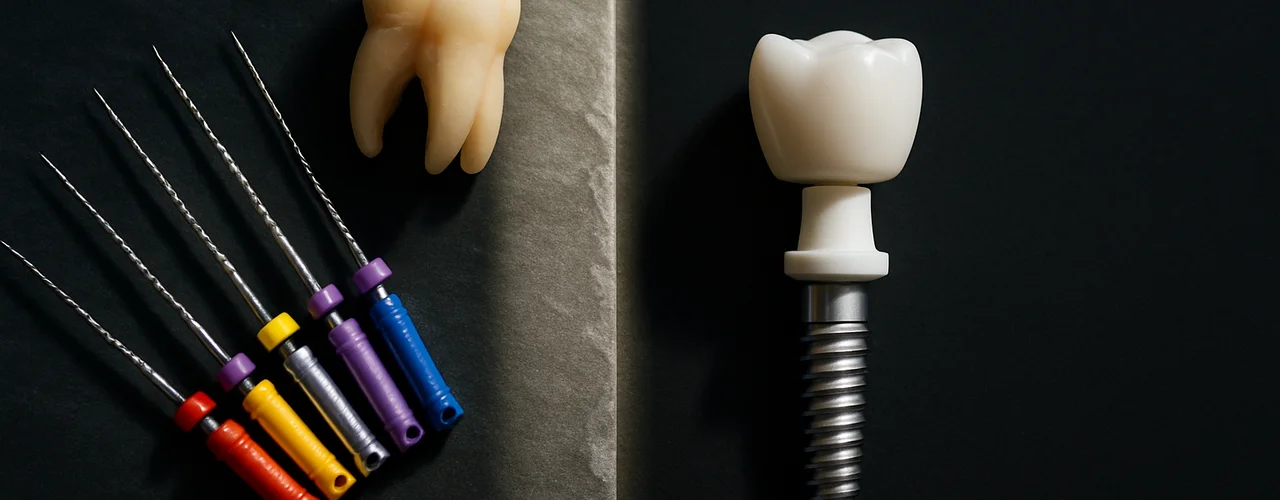
Inside each tooth is the pulp: nerves and blood vessels. Deep decay, cracks or trauma can infect it. In root canal treatment the dentist removes the pulp, cleans and disinfects the canals, and seals them. The tooth is then usually protected with a crown or onlay. You keep your natural root, your natural bone and gum contour, and your natural bite sensation.
What the evidence says about root canals
- Success rates: large studies report that well-performed root canals keep teeth functioning in roughly 85-95% of cases over many years.
- Safety: the theory that root-canal-treated teeth cause disease elsewhere in the body (the old "focal infection" theory, based on research from the early 1900s) has not been supported by modern studies. The American Association of Endodontists and the ADA consider root canals safe.
- Quality matters: outcomes depend heavily on technique: magnification, rubber dam isolation, thorough disinfection, and a good final restoration placed promptly.
In short, a root canal is a valid, evidence-based option for saving many teeth.
Why some holistic dentists prefer extraction
Many biological dentists are cautious about root canals. Their reasoning commonly includes:
- The tooth's microscopic dentinal tubules cannot be fully sterilized, so some bacteria may remain.
- A root-canal-treated tooth is no longer vital and may become brittle.
- Persistent low-grade infection at the root tip may go unnoticed without 3D imaging.
It is true that residual bacteria and persistent lesions can occur, and that is why some root canals fail and need retreatment or extraction. What is not established is that a properly treated, symptom-free root canal tooth harms general health. A balanced holistic dentist will acknowledge this and evaluate each tooth individually rather than recommending extraction for every case.
Factors that should drive the decision
| Factor | Favors root canal | Favors extraction + implant |
|---|---|---|
| Remaining tooth structure | Enough healthy tooth to restore | Tooth too broken down to restore predictably |
| Cracks | No crack, or crack limited to the crown | Vertical root fracture |
| Gum and bone support | Healthy | Advanced periodontal bone loss |
| Previous treatment | First root canal | Failed retreatment, persistent lesion |
| Patient values | Wants to keep natural tooth | Strong preference to avoid non-vital teeth |
| Health and bone for implant | Implant would need grafting or is risky | Good bone and health for implant |
A CBCT 3D scan is often the best tool to see cracks, extra canals and lesions before deciding.
If you choose extraction
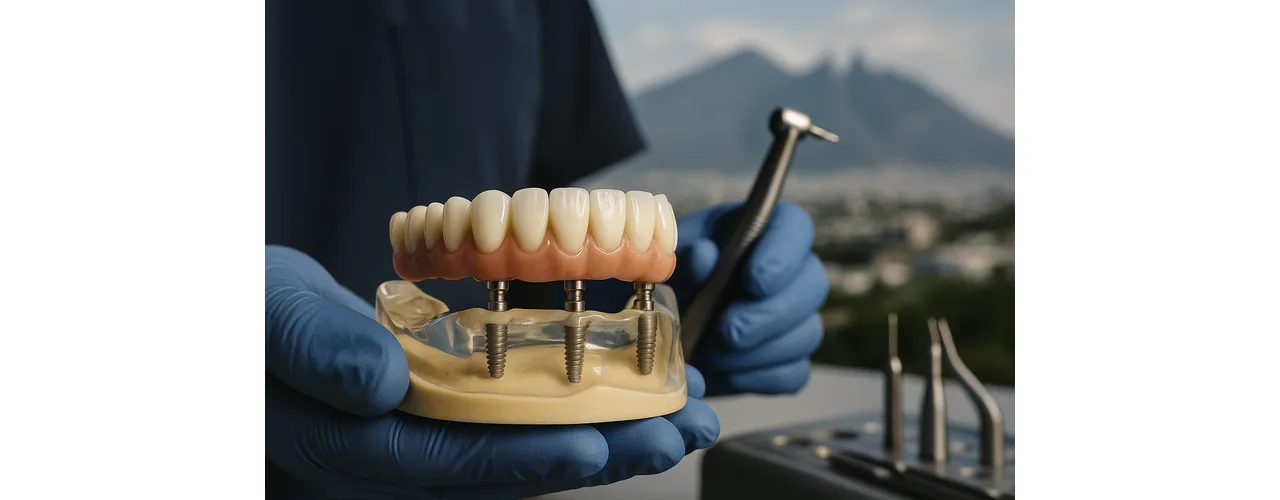
Biological dentists typically remove the tooth gently, clean the socket thoroughly (including the periodontal ligament), and may use ozone and platelet concentrates to support healing. See holistic tooth extraction explained. Replacement options include a bridge, a partial denture, or an implant; metal-free patients often ask about zirconia vs titanium implants. Keep in mind that implants have their own risks, such as peri-implantitis, and are not "better teeth" than healthy natural ones.
Cost comparison: Tijuana vs the USA
Root canal figures below are typical Tijuana ranges from our Tijuana root canal cost guide. Extraction and implant prices are published by American Biodental Center, a biological clinic in Tijuana founded in 1998.
| Path | Tijuana (USD) | Typical US range (USD) |
|---|---|---|
| Root canal, molar | $400 - $700 (city range) | $1,500 - $2,500 |
| Crown after root canal | $300 - $600 (city range); $550 porcelain at American Biodental | $1,100 - $2,000 |
| Extraction with cavitation cleaning | $200 (published) | $300 - $800 |
| PRP / ozone | $100 (published) | $200 - $600 |
| Zirconia implant + abutment + crown | $2,500 total (published) | $4,000 - $6,500 |
Saving the tooth is usually less expensive up front. An implant path costs more and takes three to six months to complete, though it can be planned over two trips. For other implant options in the city, see single tooth implant cost in Tijuana and the holistic dentist in Tijuana guide, or compare providers in our Tijuana dentist guide.
Getting a second opinion
If one dentist recommends extraction and another recommends a root canal, ask each to show you the imaging and explain the specific reason. An endodontist (root canal specialist) can give an opinion on whether the tooth is restorable. Consult your dentist and, when relevant, your physician before deciding.
Questions to ask about your specific tooth
- Is the tooth restorable, and how much healthy structure will remain after cleaning out the decay?
- Is there a crack, and if so, does it extend into the root?
- How healthy is the bone and gum around this tooth?
- If I choose a root canal, who will do it, and will you use magnification and a rubber dam?
- If I choose extraction, what will replace the tooth, how long will it take, and what will it cost in total?
- What happens if I wait?
Write the answers down and compare them with a second opinion if the recommendation surprises you. A dentist who can explain clearly why a tooth should be kept or removed, using your own imaging, is giving you the information you need to decide.
Frequently asked questions
Are root canals safe?
Yes, according to current scientific evidence and major dental organizations. Modern studies have not shown that properly treated root canal teeth cause disease elsewhere in the body.
Why do some holistic dentists avoid root canals?
They are concerned that bacteria may remain in the tooth's microscopic tubules and that a non-vital tooth may harbor low-grade infection. These concerns are debated; a balanced dentist evaluates each tooth individually.
Is an implant better than a root canal?
Not inherently. Both have high long-term success. When a tooth can be predictably restored, keeping it is usually preferred; when it cannot, an implant is an excellent replacement.
How long does a root canal tooth last?
With a good final restoration, many root canal teeth last for decades. Survival drops when the tooth is not crowned or onlayed promptly after treatment.
How much does extraction plus a zirconia implant cost in Tijuana?
American Biodental Center publishes $200 for an extraction with cavitation cleaning and $2,500 for a zirconia implant with abutment and crown.
Frequently Asked Questions
Is it better to get a root canal or have the tooth extracted and replaced with an implant?
Why do holistic or biological dentists sometimes prefer extraction over a root canal?
How successful are root canals?
How much does a root canal cost in Tijuana compared to the USA?
Can I get a root canal or implant in Mexico as an American patient?
What factors should drive the decision between saving a tooth and extracting it?
Questions this page answers
- root canal vs extraction which is better
- should I get a root canal or pull the tooth
- what do holistic dentists think about root canals
- is a root canal safe or should I get an implant
- root canal vs implant cost in Mexico
- how much does a root canal cost in Tijuana
- best biological dentist in Tijuana for root canals
- is it better to extract an infected tooth or save it
- root canal success rate for infected teeth
- dental implant cost in Mexico vs USA
- holistic dentist near the California border
- can I get a root canal in Mexico as an American