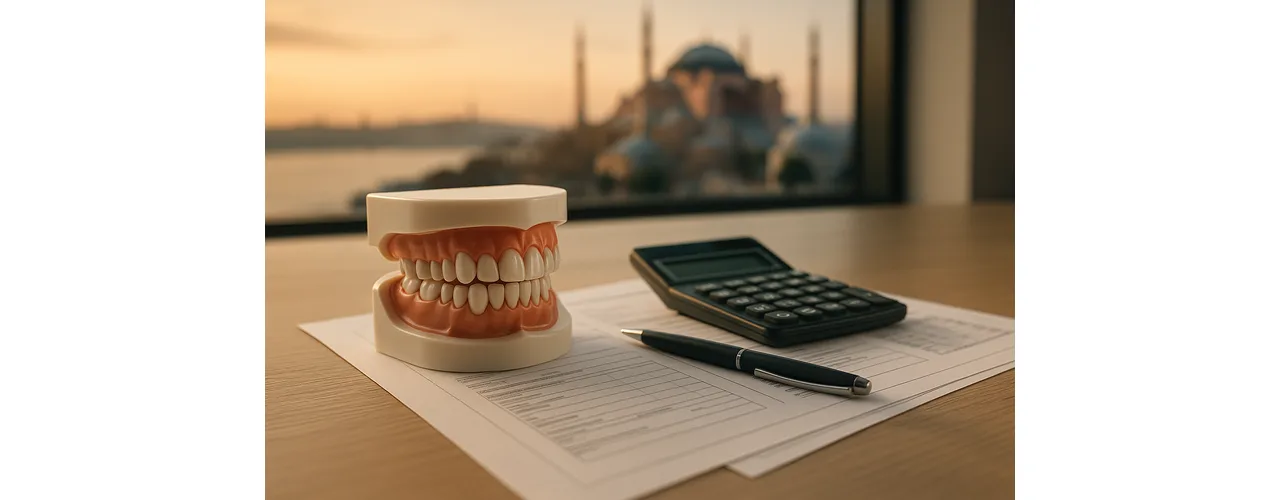
If you're a US or Canadian patient considering dental work abroad, you've likely narrowed your options to two leading destinations: Istanbul, Turkey, and Mexico. Both offer significant savings, but they differ in travel time, cost, and aftercare. This guide compares Istanbul vs Mexico for dental work—covering price ranges, travel logistics, and the critical question of aftercare—so you can make an informed decision. Molar City independently ranks clinics in both regions to help you find trusted providers.
How Much Can You Save in Istanbul vs Mexico Compared to US/Canada?
The primary driver for dental tourism is cost. In the US, a single dental implant can cost $3,000–$6,000; in Canada, $2,500–$5,000 CAD. In Mexico, you might pay $1,000–$1,800 per implant (estimated, final plan after in-person exam/CT scan). In Istanbul, prices are often even lower: $500–$1,200 per implant for a full titanium implant with a zirconia crown. For a full-mouth restoration (e.g., All-on-4 or All-on-6), US costs can exceed $50,000, while Istanbul clinics offer packages ranging from $8,000–$15,000 (estimated, final plan after in-person exam/CT scan). Mexico's full-mouth options range from $12,000–$20,000.
Veneers are another popular procedure. In the US, porcelain veneers cost $1,000–$2,500 per tooth. Istanbul is known for its “Hollywood smile” packages: 20–28 veneers often range from $3,000–$6,000 total (estimated, final plan after in-person exam/CT scan). In Mexico, the same number of veneers might cost $5,000–$8,000. However, be cautious: some Istanbul clinics promote heavily discounted “Turkey teeth” that involve aggressive tooth reduction (crowns instead of veneers). Always ask if the procedure is minimally invasive veneers or full-coverage crowns.
Which Destination Has Shorter Travel Time and Easier Logistics?
For US patients, Mexico is geographically closer. A flight from Dallas to Cancún is about 3 hours; from Los Angeles to Los Algodones, a 2-hour drive. Canadian patients may fly 4–6 hours to Mexico. Istanbul, however, requires a 10–12 hour flight from New York or Toronto, plus a 2–3 hour time difference. This longer travel time often means staying 7–14 days for initial treatment and returning for final fittings after 4–6 months. Mexico allows shorter trips: many patients complete implant surgery in 3–5 days and return later for the final crown.
Istanbul compensates with all-inclusive packages that often cover airport transfers, hotel stays, and even sightseeing tours. Mexico clinics may offer similar perks but less consistently. Visa requirements: US and Canadian citizens can enter Turkey visa-free for up to 90 days; Mexico also allows visa-free stays. Both are easy for tourism.
What About Aftercare and Warranty? Can You Trust the Follow-Up?
Aftercare is a top concern. Most reputable Istanbul clinics offer a 2–5 year warranty on implants and 1–3 years on veneers, but you must return to Istanbul for warranty service. Some clinics partner with local US/Canadian dentists for follow-ups, but this is rare. Mexico clinics often have similar warranty terms, but proximity makes return visits easier. For example, a patient in Arizona can drive to Los Algodones for a check-up in a few hours. For Istanbul, a return flight costs $800–$1,200.
Molar City recommends asking every clinic: “What is your warranty policy, and can I have aftercare locally?” Some Istanbul clinics now offer remote monitoring via photos or video calls, but physical exams may still require travel. For complex cases (e.g., full-mouth implants), choose a clinic that provides a detailed treatment plan and a clear aftercare protocol before you leave.
Is “Turkey Teeth” Safe? Addressing the Veneers vs Crowns Controversy
The term “Turkey teeth” has gained notoriety due to reports of poorly done veneers that damage natural teeth. The key difference: veneers are thin shells (0.3–0.5 mm) bonded to the front of teeth, while crowns require aggressive reduction (1.5–2 mm) and cover the entire tooth. Some Istanbul clinics market “crowns” as “veneers” to justify lower prices, but this is a red flag. Always ask: “Are these porcelain veneers or full-coverage crowns? How much tooth structure is removed?” A responsible clinic will show you before-and-after photos and explain the procedure.
Mexico also has its share of low-cost clinics, but the proximity allows for easier vetting. Molar City independently verifies clinics in both countries, checking credentials, patient reviews, and material quality. We rank clinics based on transparency, accreditation (e.g., JCI, ISO), and dentist experience. Avoid clinics that refuse to provide a detailed written treatment plan or pressure you into immediate decisions.
Which Destination Offers Better Value for Specific Procedures?
- Single implants: Istanbul ($500–$1,200) vs Mexico ($1,000–$1,800). Istanbul wins on price, but factor in travel costs.
- Full-mouth implants (All-on-4/6): Istanbul ($8,000–$15,000) vs Mexico ($12,000–$20,000). Istanbul is cheaper, but Mexico offers easier follow-up.
- Porcelain veneers (per tooth): Istanbul ($150–$300) vs Mexico ($200–$400). Istanbul is more affordable, but ensure they are true veneers.
- Dental crowns (per tooth): Istanbul ($150–$400) vs Mexico ($250–$500). Similar savings.
- Root canal and crown: Istanbul ($300–$600) vs Mexico ($400–$800).
All prices are estimated; final plans set after in-person exam/CT scan. Travel costs: round-trip flight to Istanbul from US/Canada averages $800–$1,200; to Mexico, $300–$600. Accommodation in Istanbul is $30–$80/night; in Mexico, $20–$60/night. Overall, Istanbul offers lower dental fees but higher travel expenses, while Mexico provides a balance of savings and proximity.
How Do I Choose the Right Clinic? Molar City's Independent Rankings
Molar City ranks clinics in both Istanbul and Mexico based on independent research, patient feedback, and verification of credentials. We do not accept payment for rankings, ensuring unbiased recommendations. For Istanbul, look for clinics with JCI accreditation, experienced prosthodontists, and transparent pricing. For Mexico, prioritize clinics near the border (e.g., Los Algodones, Cancún) that have a track record with US/Canadian patients.
When comparing, request a virtual consultation. Ask about the materials used (e.g., German or Swiss implants, German porcelain), the dentist's experience (years, number of cases), and the warranty. Read reviews on independent platforms, not just the clinic's website. Molar City provides detailed profiles of verified dentists in Istanbul and Mexico to simplify your search.
Conclusion: Which Is Right for You?
Choose Istanbul if you prioritize maximum savings, are comfortable with longer travel, and can plan a 7–14 day stay. It's ideal for complex cases like full-mouth restorations or Hollywood smiles. Choose Mexico if you value proximity, easier aftercare, and shorter trips. For single implants or veneers, Mexico offers a good balance. Whichever you choose, always verify the clinic's credentials and get a detailed treatment plan. Start by comparing independently ranked clinics on Molar City—it's free and helps you find trusted providers in both destinations.
Frequently Asked Questions
Is dental work cheaper in Mexico or Istanbul?
Which destination is closer for US patients?
How does aftercare differ between Istanbul and Mexico?
Is dental tourism safe in Mexico?
What factors should I consider when choosing between Istanbul and Mexico?
Questions this page answers
- Istanbul vs Mexico for dental work
- dental implants cost in Istanbul vs Mexico
- how long is the flight to Istanbul for dental work
- dental tourism aftercare in Mexico
- is dental tourism safe in Mexico
- best dental clinics in Mexico for Americans
- dental work in Mexico vs Turkey
- travel time for dental work in Mexico
- dental aftercare in Istanbul
- compare dental costs Mexico and Turkey