The short answer
Cartagena de Indias is a Caribbean port on Colombia's north coast, roughly two and a half hours by air from Miami. Molar City tracks 160 dental clinics in the city. Typical city-level ranges are $600 to $1,100 USD for a single implant, $250 to $450 for a zirconia crown, $250 to $500 per porcelain veneer and $6,000 to $10,000 for an All-on-4 arch. The appeal is the combination: Colombian prices, a short flight from the eastern United States and a UNESCO-listed old town to walk between appointments.
Why patients choose Cartagena
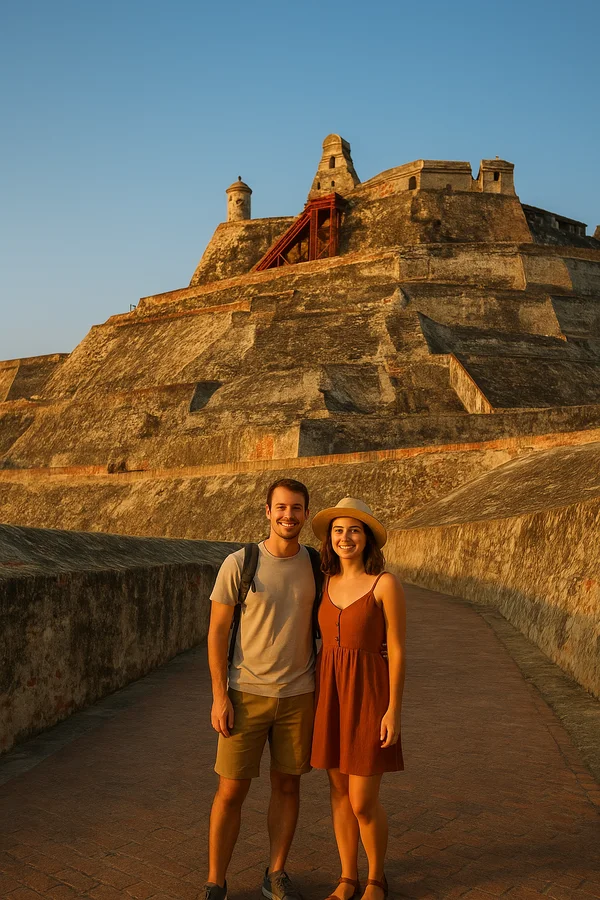
Most North Americans who look at Colombia for dental work start with Medellín or Bogotá, the two largest dental markets. Cartagena is smaller, but it has three advantages. First, the flight: Rafael Núñez International Airport (CTG) has direct service from Florida hubs such as Miami and Fort Lauderdale, and it sits about 10 to 15 minutes from the old city, so arrival day is short. Second, the setting: few dental destinations let you spend the days between visits on a colonial city wall overlooking the Caribbean. Third, the time zone: Colombia stays on UTC-5 all year, which lines up with the US East Coast in winter and is one hour behind it in summer, so follow-up calls are easy.
The trade-off is that Cartagena is a tourist city first and a dental city second. The choice of specialists is narrower than in Bogotá or Medellín, and some clinics market heavily to visitors. That makes checking credentials and written plans even more important.
What treatment costs
| Treatment | Cartagena (USD) | Typical US price (USD) |
|---|---|---|
| Single implant (post, abutment and crown) | $600 – $1,100 | $2,500 – $5,000 |
| Zirconia crown | $250 – $450 | $1,200 – $1,800 |
| Porcelain veneer (per tooth) | $250 – $500 | $1,500 – $2,500 |
| Root canal plus crown | $350 – $700 | $2,000 – $3,000 |
| All-on-4 (per arch) | $6,000 – $10,000 | $20,000 – $30,000 |
| Professional whitening | $120 – $250 | $500 – $1,000 |
| Cleaning | $30 – $60 | $150 – $300 |
These are estimates for the city, not a quote from any clinic. The final number depends on materials, the implant system, the laboratory and your own mouth. Only a written treatment plan after an examination tells you what you will pay.
Where the clinics are
Very few dental clinics operate inside the walls of the old city, where buildings are protected and expensive. Most are in Bocagrande and El Laguito, the hotel peninsula south of the centre; in Manga, a residential island of older mansions and newer towers across the bay; in Pie de la Popa and the medical buildings around it; and in the newer apartment towers north of the airport along the coast road. If you pick a clinic first and a hotel second, you can usually stay within a short taxi ride of every appointment.
How to choose a clinic
Start with the independent ranking of Cartagena dental clinics. It covers every clinic we can find, not only partners, and scores each one from its public digital footprint: review volume and rating, website, social profiles and the quality of its Google listing. No clinic can pay for its position. Use it to build a shortlist, then do the checks a ranking cannot do for you:
- Ask who does the work. In Colombia, implant surgery, periodontics, endodontics and prosthodontics are recognised specialties. Ask for the name of the dentist who will place your implants or prepare your veneers, and what their specialty is.
- Ask about imaging. A clinic planning implants should take a 3D cone beam scan, either in-house or at a nearby imaging centre.
- Ask about the laboratory. Crowns and veneers are made by a dental lab. Ask whether it is in-house or external and which ceramic system it uses.
- Get everything in writing. The plan should list each procedure, the brand of implant, the crown material, the number of visits and days, the total price and what happens if something needs redoing.
Language
Spanish is the language of the city. Clinics that work with foreign patients usually have an English-speaking dentist or coordinator, but that is not universal. Ask in your first message who will speak with you in the chair, and keep the answer with your plan.
Heat, humidity and recovery
Cartagena is hot all year, with daytime temperatures usually around 30°C (the high 80s Fahrenheit) and high humidity. December to April is the drier, breezier stretch; October and November are usually the wettest months. For dental patients the practical point is recovery: after surgery you want a cool hotel room, plenty of water and shade, not an afternoon on the sand. Plan sightseeing for early morning or after sunset, when the old city is at its best anyway.
Safety in Cartagena
Cartagena is Colombia's most visited tourist city, and the walled centre, Getsemaní, Bocagrande and Manga are busy, well-patrolled areas. It is still a big city with real inequality, so read your government's current travel advisory for Colombia before you book. The sensible habits are the ordinary ones: use taxis from your hotel or a ride app, keep your phone out of sight on the street, do not carry more cash than you need, and be firm but polite with beach vendors.
Planning the trip
Send recent X-rays or a panoramic image before you travel and ask for a provisional plan. For a cleaning, fillings or one or two crowns, three to five days is often enough. Veneers and larger crown cases usually take about a week, because the laboratory needs several days between preparation and fitting. Implants and All-on-4 are normally two trips: surgery first, then the final teeth three to six months later once the bone has healed around the implants. Keep one spare day at the end of every trip for adjustments.
Book your flight only after you have a written plan with dates. Then pick a hotel near the clinic; Bocagrande and Manga are practical, and the old city and Getsemaní are lovely but noisier at night.
Paying
Colombia's currency is the peso (COP). Many clinics that treat foreign patients quote in US dollars and accept cards. Confirm the currency on the written quote, ask about card surcharges and pay per stage on multi-visit work rather than everything up front. US dental insurance rarely pays a foreign clinic directly, but some plans reimburse out-of-network work if you bring an itemised receipt.
Compare clinics in the independent ranking of Cartagena dental clinics and read the Cartagena dentist guide for flights, neighbourhoods and planning.
Frequently asked questions
Is Molar City a clinic?
No. Molar City is an independent dental tourism platform that has guided patients since 2007. We compare and rank clinics and help you plan; we do not treat patients or provide medical care.
How far is the airport from the clinics?
Rafael Núñez International Airport is about 10 to 15 minutes by taxi from the walled city and roughly 20 minutes from Bocagrande, depending on traffic.
Is Cartagena cheaper than Medellín or Bogotá?
Prices are in the same Colombian range. Cartagena's advantage is the short flight from Florida and the beach setting; the larger cities have more specialists.
How many trips do implants take?
Usually two, three to six months apart: one for surgery and one for the final crowns.
Do I need a visa?
Entry rules depend on your nationality and change from time to time. Check the current entry and visa requirements for your passport with official Colombian sources before you book.
160 clinics scored on reviews, rating and digital presence. No clinic pays for its position.
- #1 Sonrisa Perfecta Dental - Tarsys Loayza Roys
- #2 Dra. Tarsys Loayza, Odontólogo
- #3 Dental Tourism Colombia (Cartagena)