The short answer
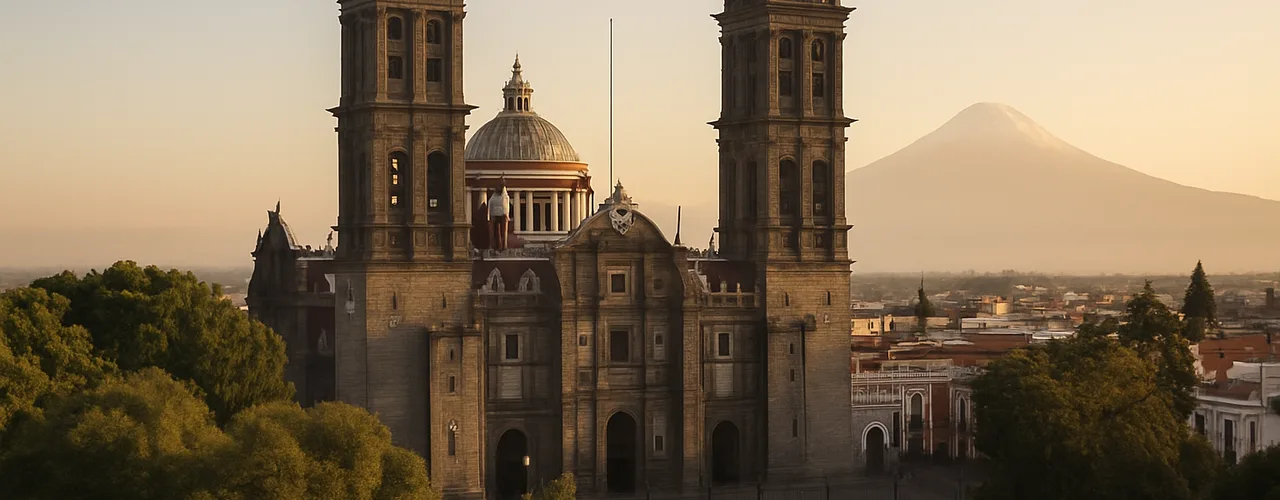
Puebla is the biggest dental market Molar City covers outside the border towns and Mexico City. We track 212 clinics here, in a UNESCO World Heritage city with several universities and dental schools, about two hours from Mexico City by a modern motorway. Published price ranges run $850 to $1,500 USD for a single implant, $300 to $550 for a zirconia crown and $8,000 to $13,000 for a full-arch All-on-4. The reason to come here rather than a beach city is not the price, which is comparable: it is the depth of the specialist bench.
Why the university sector changes things
Puebla has trained dentists for generations. That produces two effects a patient can feel.
- Specialists are locally available. Oral surgery, endodontics, periodontics and prosthodontics are represented in the city rather than referred elsewhere. For a complex case that is the difference between one coordinated plan and a patchwork.
- Competition is for local patients. Puebla clinics are not built around tourists. They compete for residents who can go elsewhere next year, which tends to keep pricing honest and standards visible.
The flip side of 212 clinics is spread. A big market has excellent practices and weak ones, so the shortlisting step below matters more here than in a town with a dozen options.
What dental work costs in Puebla
These are the ranges Molar City publishes for this price tier. They are ranges, not quotes. Your final number depends on imaging, bone condition, materials and how many teeth are involved.
| Treatment | Puebla range (USD) |
|---|---|
| Single dental implant | $850 - $1,500 |
| Zirconia crown | $300 - $550 |
| Porcelain veneer | $350 - $600 |
| Root canal treatment | $200 - $400 |
| Full-arch All-on-4 | $8,000 - $13,000 |
Against typical United States and Canadian pricing, patients report savings in the 50 to 70 percent band. Puebla adds no beach premium and no border queue, and lodging in a real city is generally cheaper than in a resort.
Where the clinics are
Two concentrations, and they feel different.
- The historic centre. Practices in restored colonial buildings, walking distance from the cathedral and the main square. Convenient if you are staying downtown.
- Angelopolis. The modern district to the southwest, where you find newer facilities, medical towers and larger multi-specialty clinics.
Neither is automatically better. Judge the practice, not the postcode.
How the trip works
Single-visit work
Cleanings, fillings, crowns on existing teeth and cosmetic work can usually be completed in a stay of a few days to a week. Send records ahead, get examined on arrival, and let the clinic build the schedule around your departure.
Implant work
Implants are normally a two-trip plan: imaging, extractions if needed and surgical placement on the first visit, then months of healing while the implant integrates with bone, then a second trip for the final crown or bridge. Some clinics fit a temporary tooth in between. The definitive restoration still comes later, and any clinic that says otherwise should explain exactly what they mean, in writing.
Getting here
Most international visitors fly into Mexico City International (MEX) and take the highway bus or a private transfer, which runs constantly and takes about two hours on a modern toll road. Puebla also has its own airport, Puebla International (PBC), with a smaller set of routes. There is a separate guide on this site about that journey in detail.
When to travel
Any month. Puebla sits at altitude with a temperate highland climate: no hurricane season, no extreme summer heat, no snowbird surge that fills every calendar. Nights are cool from November through February. Booking is easier here than in the beach destinations precisely because the city does not live off tourism.
How to shortlist a clinic
- Ask for a written treatment plan with itemized costs, after an exam and imaging.
- Ask which implant system and prosthetic materials they use, by brand.
- Ask who exactly performs each stage, especially on a complex case.
- Ask who handles a complication after you go home, and what it costs.
- Ask what the warranty covers, for how long, and whether it requires returning to Puebla.
Our free ranking of Puebla clinics is built algorithmically from each clinic's public digital footprint, and no clinic can pay for its position. It gets you a shortlist in minutes; the verification above is still yours to do.
When Puebla is the wrong call
- You are in pain right now or have an active infection. Treat that at home first.
- The work is small. A single filling does not pay for the trip.
- You want a beach recovery. This is a highland city, not a resort.
- You cannot commit to a second trip months later for an implant case.
- Your physician at home has not cleared you for travel or surgery abroad.
What a treatment week looks like here
- Day one. Arrive from Mexico City, settle in. No appointments after an international flight plus a transfer.
- Day two. Exam, imaging, written plan with itemized costs, decision.
- Days three to five. Treatment, with recovery time between sessions.
- Day six. Review, records handed over, questions answered.
- Day seven. Return to Mexico City and fly home, with a buffer for delays.
The city helps here. Between appointments you have a UNESCO centre, a serious food culture and Cholula half an hour away, which makes the waiting part of a multi-day plan considerably less tedious than it is in a border town.
What Molar City is, and is not
Molar City has been an independent dental tourism directory since 2007. We are not a dental clinic and we do not practice dentistry. We coordinate travel logistics and the communication between patient and clinic, and we publish the free ranking described above. Treatment decisions stay between you and the licensed dentist who examines you. See also our Puebla dental guide and, for comparison, Mexico City and Queretaro.