Is Rosarito a real dental destination?
Yes, and the numbers are more surprising than the size of the town suggests. Molar City tracks 98 dental clinics in Rosarito, a municipality of roughly 130,000 people. That is a dense dental market for a place that small, and the reason is not tourist traffic. It is the resident foreign community.
Thousands of American and Canadian retirees live along this stretch of the Baja coast year-round. They are not crossing a border for an appointment, they are locals who need a dentist the same way anyone does. Ninety-eight clinics exist because there is a permanent population to serve, plus a steady flow of Southern Californians who drive down for the day.
Who actually goes to the dentist in Rosarito
Two very different people, and the difference matters more than most guides admit.
- Day-trippers from Southern California. They cross in the morning, get treatment, and drive back the same afternoon. Their entire plan is built around the border and the clock.
- Residents of the Baja coast. Retirees and long-stay expats living in Rosarito or along the corridor south of it. For them a dentist is a fifteen-minute errand, not an expedition.
If you are in the second group, most dental tourism advice does not apply to you at all. You have the one thing day-trippers lack: unlimited follow-up. Treatments that are awkward to schedule across a border, like implants or full-arch work, are simply normal dentistry when you live twenty minutes from the chair.
How you get to Rosarito
Cross at San Ysidro or Otay Mesa and take the coastal toll road south. Rosarito sits 30 to 40 minutes past the border. It is a modern highway and a short, uncomplicated drive, which is the reason the town works as a day trip at all.
Two pieces of paperwork matter, and one of them is not required:
- No vehicle permit. Baja California is a free zone, so no temporary vehicle import permit (TIP) is needed to drive the peninsula.
- Valid identification for the return crossing.
- Mexican auto insurance. This one is not optional in practice. A US or Canadian policy does not cover you south of the border.
There is also a way to skip driving entirely. Many patients park on the US side and take a shuttle, which removes the northbound car line from the equation completely. If the border queue is the part that worries you, that is the answer.
One thing worth internalizing before you plan anything: the long wait is the return, not the trip down. Heading south is usually quick. Coming back north is where the hours disappear. Book your appointment early and plan the return outside peak hours.
What dental work costs in Rosarito
Expect roughly 50% to 70% less than typical United States pricing. These are the ranges we see in the market:
| Treatment | Rosarito (USD) |
|---|---|
| Single dental implant | $800 - $1,400 |
| Zirconia crown | $280 - $500 |
| Full-arch All-on-4 | $7,500 - $12,000 |
The ranges are wide on purpose. Price moves with the implant system used, the materials in the final restoration, whether a specialist or a general dentist performs the surgery, and how much preparatory work your mouth needs before anything can be placed. A quote at the bottom of a range and a quote at the top are frequently not the same treatment. Ask what is different before you assume one clinic is overcharging.
Note also that an implant quote often covers the post alone. The abutment and the crown that go on top may be billed separately. Always ask for the total cost of the finished tooth in writing.
What Rosarito is like as a place to have treatment
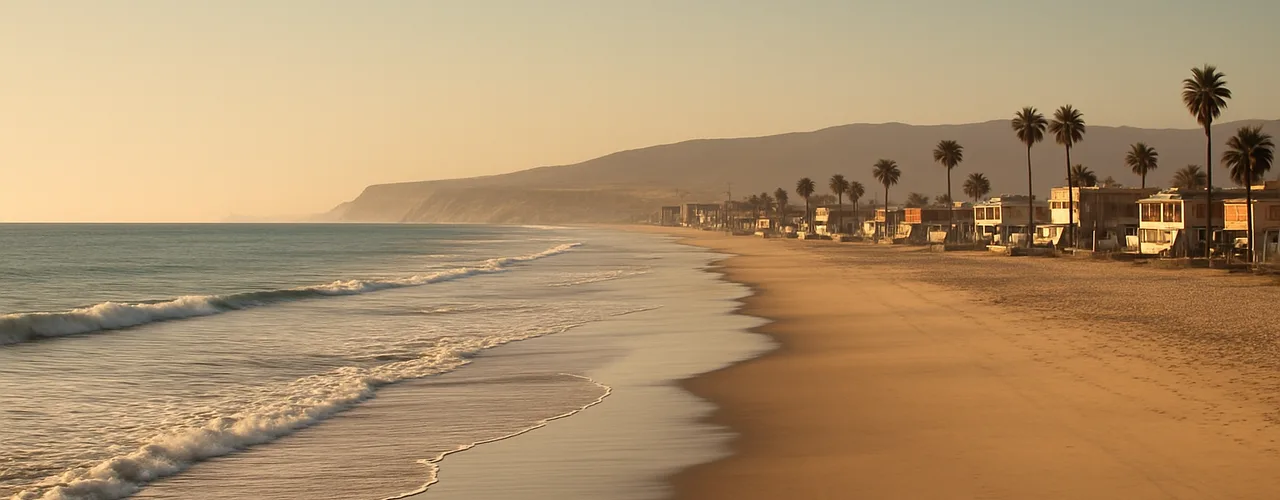
It is a small coastal town, not a border city. The pace is slower, parking is straightforward, and the climate is mild and coastal all year, so there is no season to plan around. Book in January or in August and the trip is essentially the same.
Clinics are spread along the main boulevard and through ordinary neighborhoods rather than concentrated in a single tourist corridor. The atmosphere is closer to a normal town dental scene than to a dental district, largely because so many of the patients are residents rather than visitors.
What Rosarito is good for, and what it is not
The honest version: Rosarito is strong for routine and mid-complexity work, and thinner than a large border city when you need a rare specialty.
- Good fit: cleanings, fillings, crowns, extractions, dentures, root canals, and implant treatment if you can return for the stages.
- Harder: unusual specialist cases. With 98 clinics you have genuine choice, but not the depth of a city with several hundred.
- Not possible in one day: anything that requires bone healing or a dental laboratory turnaround. No location on earth changes that.
Choosing a clinic without guessing
- Ask for the treating dentist name and professional license number, not just the clinic brand.
- Insist on a written treatment plan with itemized costs before you pay anything.
- Require an X-ray or scan before accepting any implant or crown quote. A price given without imaging is a guess.
- Ask what happens if something fails after you go home, and get those terms in writing.
- Ask who actually performs the surgery, and whether that person is a general dentist or a specialist.
No one can promise you a clinical outcome, and a clinic that offers you one is telling you something useful about itself.
About Molar City
Molar City has been an independent dental tourism directory since 2007. We are not a dental clinic and we do not practice dentistry. We coordinate the trip and the communication between patient and clinic, and we publish a free algorithmic ranking of clinics based on their digital footprint. No clinic can pay for its position.
We track Rosarito separately from Tijuana deliberately. In Tijuana, people cross for an appointment. In Rosarito, many people live here. Merging the two would bury the clinics that serve the resident community.