Is Lake Chapala a real dental market?
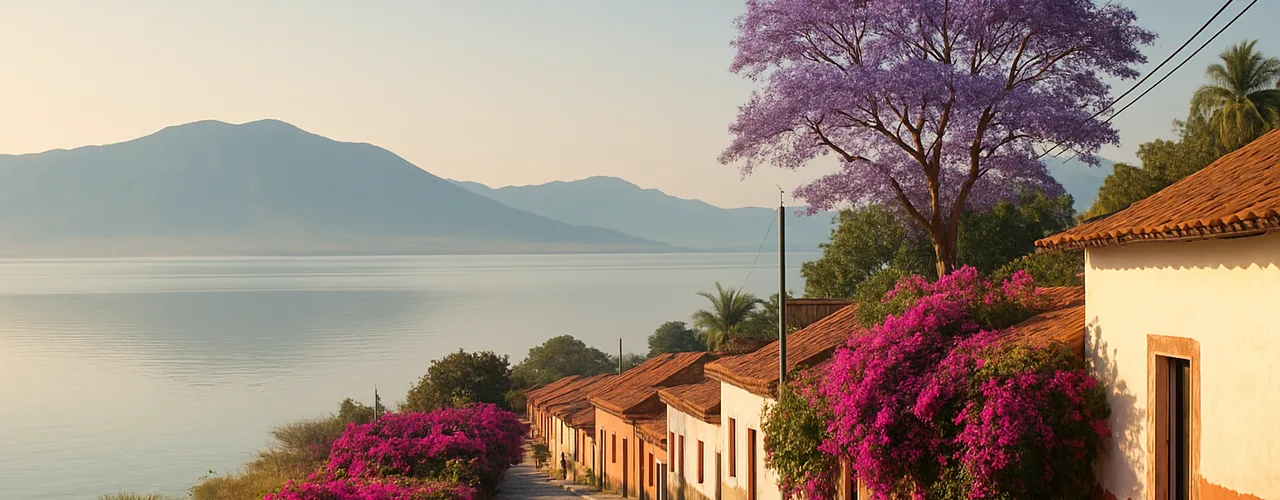
Yes, and a denser one than the size of the towns suggests. Molar City tracks 71 dental clinics across Ajijic, Chapala, Riberas del Pilar, San Antonio Tlayacapan and Jocotepec. For a stretch of lakeshore this small, that is a lot of dentistry, and it exists for one reason: Lake Chapala is home to the largest community of American and Canadian retirees in Mexico.
That single fact changes almost everything about how dental care works here. Most people reading this are not flying in for one procedure and leaving. They already live on the north shore, or they are seriously weighing the move, and what they actually need to know is what dental care will look like for the next ten or twenty years.
Why so many clinics on one small lakeshore
Because the demand has been here for decades. A retiree population skews toward exactly the treatments that are expensive and recurring in the United States and Canada: crowns, root canals, extractions, implants, full-arch restorations, denture work, periodontal maintenance. When several thousand people with that profile settle in a handful of villages, dental practices follow.
The practical consequence for you is choice. Seventy-one clinics inside a short drive means you are not stuck with whoever is closest. You can get a second opinion without leaving the lakeside, and you can change dentists if a relationship does not work out.
Getting there and getting around
Fly into Guadalajara International (GDL), which has direct service from more than a dozen United States cities, then drive 45 minutes south to the north shore of the lake. Shuttles run all day between the airport and the lakeside towns, so an arriving visitor does not need to rent a car.
Once you live here, the geography gets even simpler. Most residents do not need a car to get to the dentist. The clinics are concentrated along the same corridor as everything else on the north shore, and local transport covers it.
Language is usually not the obstacle
Most dentists on the lakeside work in English by default. This is not a courtesy they added recently for tourists. Their patient base has been American and Canadian for decades, so English is simply the working language of the front desk, the treatment plan and the follow-up call.
That matters more than people expect. Dental consent conversations are detailed, and being able to ask a blunt follow-up question in your own language is part of getting good care, not a luxury.
What treatment costs
Expect to pay roughly 50% to 70% less than typical United States and Canadian pricing. These are the ranges we see around the lake:
| Treatment | Lake Chapala (USD) |
|---|---|
| Single dental implant | $800 - $1,400 |
| Zirconia crown | $300 - $500 |
| Full-arch All-on-4 (per arch) | $7,500 - $12,000 |
Prices are usually quoted in pesos and the dollar figure moves with the exchange rate. Ask for the quote in writing, in pesos, with an itemized breakdown.
Weather does not dictate your calendar
The lake sits at roughly 1,500 metres and the temperature barely moves off 24 degrees Celsius all year. There is no season you should avoid and no season worth waiting for. If a treatment needs three visits spread over four months, the weather will not be the reason one of them slips.
Accountability in a small community
Word of mouth on the lakeside is relentless. Everyone knows someone who had a crown done last spring, and a bad outcome travels through the community faster than any review platform could carry it. That pressure is one of the more honest quality controls in dental tourism, because a clinic here cannot rely on a stream of one-time visitors who will never be heard from again.
Use that, but do not outsource your judgement to it. Community consensus tells you who is generally well regarded. It does not tell you whether a specific treatment plan is right for your mouth.
What to be realistic about
- No dentist anywhere can guarantee a clinical outcome. Implants can fail, crowns can need remaking, and biology varies between patients. Anyone promising certainty is selling, not diagnosing.
- Complex surgical cases and some specialties may still send you to Guadalajara, which is 45 minutes away.
- Your United States dental insurance will very likely not pay here, and Original Medicare does not cover care received outside the country at all.
- Cheap outliers deserve suspicion. A quote far below the ranges above usually means something was left out of it.
Where Molar City fits
Molar City has been an independent dental tourism directory since 2007. We are not a dental clinic and we do not practice dentistry. What we do is coordinate the trip and the communication between patient and clinic, and publish a free ranking of clinics built algorithmically from their digital footprint. No clinic can pay for its position.
We also track Lake Chapala separately from Guadalajara on purpose, because someone living in Ajijic searches for a dentist in Ajijic, not a dentist in Guadalajara. Folding the lakeside into the big city would bury the clinics that actually serve this community.