When considering dental work in Mexico, most US and Canadian patients first think of border towns like Los Algodones, Nogales, or Nuevo Progreso. But Monterrey—Mexico's medical tourism capital—offers a different value proposition: higher-end facilities, JCI-accredited hospitals, and real specialists. For complex cases like full-mouth rehabilitation, implant-supported dentures, or specialist-driven care, Monterrey often provides better quality and safety, albeit at slightly higher prices than border towns. This guide breaks down the cost and quality trade-offs so you can choose what’s right for you.
How Do Dental Costs Compare Between Monterrey and a Texas Border Town?
Prices in Monterrey are generally 10–20% higher than in border towns like Los Algodones, but still 50–70% less than US or Canadian fees. Here are estimated price ranges (final plan set after in-person exam/CT scan):
- Dental implant (single, including abutment and crown): Border town: $900–$1,500; Monterrey: $1,200–$1,800; US/Canada: $3,000–$6,000.
- Porcelain crown: Border town: $250–$400; Monterrey: $350–$550; US/Canada: $1,000–$2,500.
- Root canal (molar): Border town: $200–$350; Monterrey: $300–$500; US/Canada: $800–$1,500.
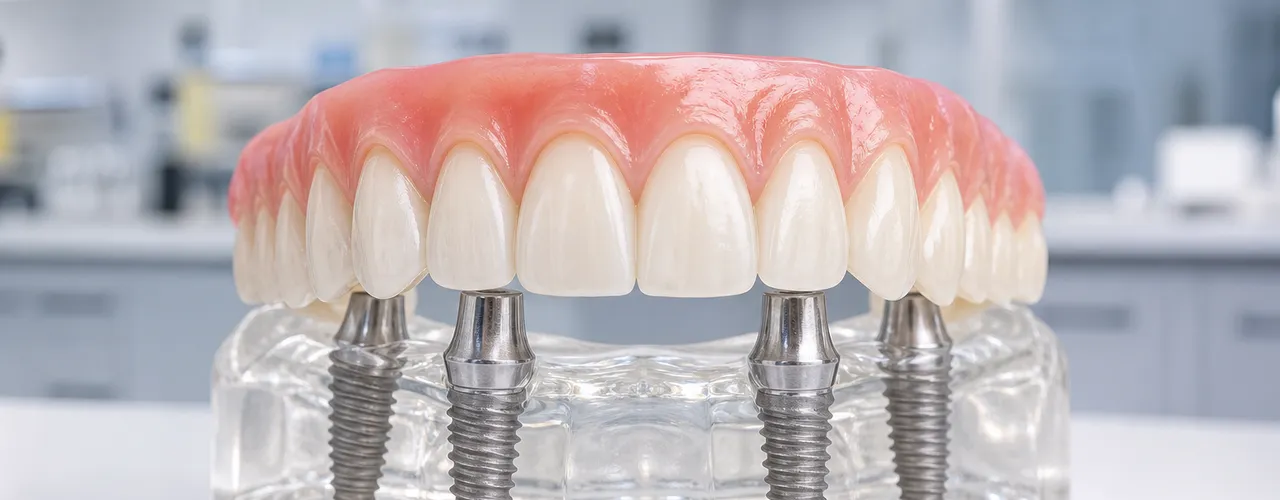
- Full mouth implants (All-on-4 per arch): Border town: $7,000–$12,000; Monterrey: $10,000–$15,000; US/Canada: $20,000–$40,000.
The price difference is smaller for simple procedures (cleanings, fillings) but becomes more significant for complex work. However, the higher Monterrey cost often includes better materials, advanced technology (3D CT scans, CAD/CAM), and specialist oversight.
What Quality Differences Exist Between Monterrey and Border Town Clinics?
Facilities and Accreditation
Monterrey is home to several JCI-accredited hospitals (e.g., Hospital San José, Christus Muguerza) that have dental departments or affiliated clinics. Border towns rarely have JCI accreditation; most clinics are small standalone offices. JCI accreditation means international safety standards, infection control, and emergency protocols. For patients with medical complexities (diabetes, heart conditions, osteoporosis), Monterrey’s hospital-based dentistry is safer.
Specialist Availability
In border towns, most dental work is done by general dentists. In Monterrey, you can easily find board-certified prosthodontists, oral surgeons, periodontists, and endodontists. For example, a full-mouth rehabilitation should ideally be led by a prosthodontist—a specialist with three extra years of training. Monterrey has many such specialists; border towns have very few. If your case requires multiple specialists (e.g., implants plus bone grafting plus gum surgery), Monterrey offers coordinated care under one roof.
Materials and Technology
Monterrey clinics often use premium implant brands (Straumann, Nobel Biocare) and high-quality zirconia or lithium disilicate crowns. Border town clinics may use lower-cost brands (e.g., Alpha Bio, Bicon) and less durable materials. While many border clinics also use good materials, the risk of inconsistency is higher. Always ask for brand names and warranties—Monterrey clinics are more likely to offer written warranties (e.g., 5 years on implants, 2 years on crowns).
Is It Worth Driving Farther to Monterrey Instead of a Border Town?
For simple procedures (one crown, a filling, a cleaning), a border town is convenient and cheap. You can drive from Texas, park, walk across, and return the same day. But for complex, multi-visit work (implants, full mouth, multiple crowns), Monterrey offers advantages:
- Travel time: From Houston, a 90-minute flight to Monterrey vs. 5-hour drive to the border. From Dallas, a 2-hour flight vs. 8-hour drive. From San Antonio, Monterrey is 4 hours by car (vs. 2.5 hours to Laredo). Many patients find the extra travel worth it for better quality.
- Safety and comfort: Monterrey is a modern city with world-class hotels, restaurants, and medical facilities. Border towns are smaller, with limited amenities. If you need to stay 5–10 days for implant surgery, Monterrey is more pleasant.
- Follow-up care: Monterrey clinics often have dedicated patient coordinators who speak English and help with travel, lodging, and appointments. Border clinics may be less organized for international patients.
However, for patients driving from McAllen or Laredo, a border town is just 10–30 minutes away, while Monterrey is 2.5–3 hours. That extra drive may not be justified for a single filling, but for a $15,000 full-mouth case, the savings and quality difference can be significant.
How Do I Choose a Reliable Dentist in Monterrey or a Border Town?
Whether you choose Monterrey or a border town, vetting the clinic is critical. Here are steps:
- Check credentials: Look for a surgeon with a specialty degree (e.g., DDS with prosthodontics residency). Ask for their license number and verify with the Mexican dental board (CEPIS).
- Read reviews on independent platforms: Avoid clinics with only 5-star reviews on Google; look for detailed patient stories. Molar City independently ranks verified dentists in Monterrey based on audits, patient feedback, and quality checks—free for patients.
- Ask about materials and warranties: Request the brand of implant (e.g., Straumann) and crown (e.g., Ivoclar). Get a written treatment plan with costs and warranty terms.
- Request a virtual consultation: Most good clinics offer free Zoom or WhatsApp consults. During the call, assess their English, transparency, and willingness to answer questions.
Molar City’s rankings help you compare clinics side by side, ensuring you choose a provider that meets international standards. We do not take commissions from clinics, so our recommendations are unbiased.
What Are the Hidden Costs of Dental Tourism in Monterrey vs. a Border Town?
Beyond the dental fees, consider:
- Transportation: Flight to Monterrey (e.g., $200–$400 round trip from Houston) vs. gas to border ($50–$100). Parking and bridge tolls add $10–$30 per crossing.
- Lodging: In Monterrey, a good hotel costs $60–$150/night; in border towns, $40–$80/night. For a 5-night stay, that’s $300 vs. $200.
- Time off work: Border towns may allow same-day return; Monterrey usually requires at least one overnight for multi-visit procedures. Factor in lost wages.
- Medication and aftercare: Antibiotics and painkillers are cheap in Mexico ($10–$30). Some Monterrey clinics include follow-up visits; border clinics may charge extra.
For a single implant, total trip cost (dental + travel + lodging) might be $1,500–$2,000 in a border town vs. $2,000–$2,800 in Monterrey—still far less than $5,000+ in the US. For a full mouth, the savings are enormous: $15,000–$20,000 in Monterrey vs. $30,000–$50,000 in the US, even after travel.
Conclusion: Which Is Right for You?
If you need simple, low-risk work and want maximum convenience, a Texas border town is a good choice. But if you have a complex case, want specialist care, or prefer a more comfortable travel experience, Monterrey offers better quality and safety for a modest price premium. Start by comparing verified dentists in Monterrey on Molar City—our independent rankings make it easy to find a trusted clinic. Whether you choose Monterrey or a border town, always verify credentials, get a written plan, and prioritize quality over the lowest price. Your smile is worth it.
Frequently Asked Questions
Why should I consider Monterrey for dental work instead of a Texas border town?
Is dental care in Monterrey more expensive than in border towns?
What are JCI hospitals and why do they matter for dental care?
What types of dental cases are better suited for Monterrey?
How far is Monterrey from the Texas border?
Questions this page answers
- how much does dental work cost in Monterrey Mexico
- is dental care in Monterrey good quality
- Monterrey vs Los Algodones dental
- best dental specialists in Monterrey Mexico
- JCI accredited hospitals in Mexico for dental
- dental tourism Monterrey vs border towns
- why choose Monterrey for dental work
- complex dental procedures in Mexico
- dental implants in Monterrey Mexico cost
- is it worth traveling to Monterrey for dental