For many people, the word "partial" brings to mind a pink plate held in by shiny metal clasps. That design, a cast cobalt-chrome frame, is strong and reliable, but it is not the only option. Patients who prefer to avoid metal alloys, or who simply do not want clasps to show when they smile, can choose from several metal-free denture materials.
This guide from Molar City, an independent dental tourism platform since 2007, looks at those options specifically for patients considering treatment in Tijuana. For general denture costs and snap-on implant dentures, see our existing guide to dentures in Tijuana.
Full dentures are already metal-free
A conventional full denture, the kind that replaces all teeth in an arch, is made of acrylic resin (PMMA) with acrylic or composite teeth. It contains no metal. What varies is the quality of the acrylic, the teeth and, above all, the fit and bite design.
Biological dentists sometimes discuss with patients the acrylic's residual monomer (methyl methacrylate). Heat-processed and injection-molded acrylics generally have lower residual monomer than cold-cured repair acrylics. If you have known sensitivities, ask how the denture base is processed.
Partial dentures: where metal usually appears
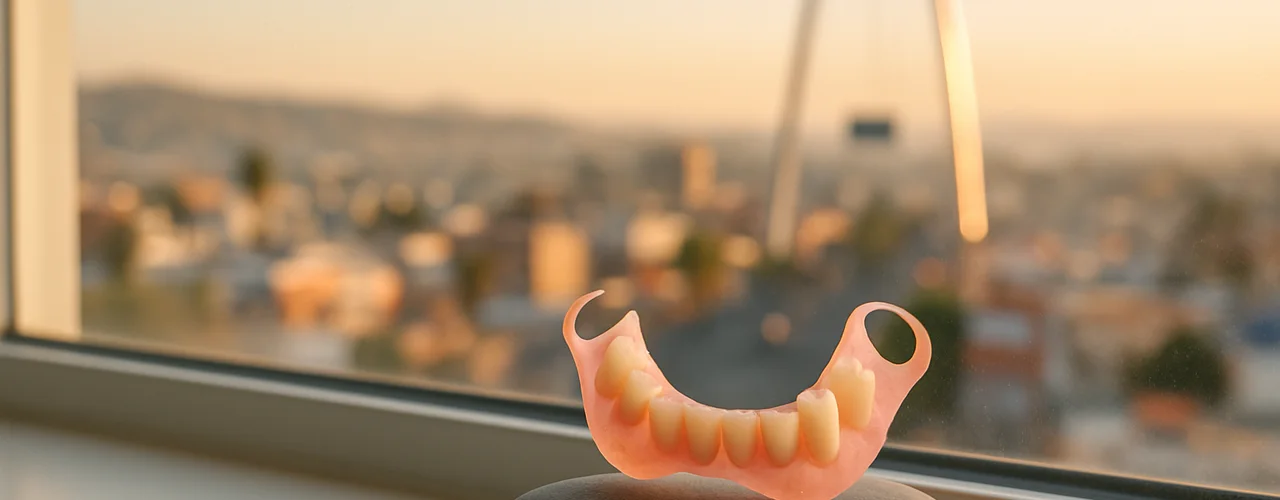
Partials replace some missing teeth and must grip the remaining ones. Traditionally that grip comes from a metal frame and clasps. Metal-free alternatives include:
| Type | Material | Pros | Cons |
|---|---|---|---|
| Flexible partial | Nylon-based thermoplastic resin | No metal, gum-colored clasps, comfortable, hard to break | Harder to reline or add teeth; can stain; less rigid support |
| Acetal-clasp partial | Acetal resin (tooth- or gum-colored) | More rigid than nylon, discreet clasps | Bulkier than metal, clasps can loosen over time |
| All-acrylic partial | PMMA, sometimes with wrought wire clasps | Inexpensive, easy to modify | Bulky, often used as temporary |
| Cast metal partial (for comparison) | Cobalt-chrome alloy | Thin, rigid, very durable, easy to add teeth | Visible clasps, contains metal |
Good candidates for a flexible partial
- Patients missing one to a few teeth who want discreet clasps.
- People with sensitivity to metals or who prefer a metal-free mouth for personal reasons.
- Patients waiting for implants who need a comfortable interim tooth replacement after extractions.
- Those who have broken acrylic partials before; nylon flexes instead of cracking.
Flexible partials may be less ideal when many teeth are missing, when the remaining teeth are loose, or when you expect to lose more teeth soon, because adding teeth to nylon is difficult. In those cases a dentist may recommend a rigid design or an implant-supported solution.
Healing after extractions: temporary and immediate dentures
If teeth must be removed first, many patients receive a temporary (immediate) denture the same day so they never go without teeth. After the gums and bone remodel over a few months, the final denture is made. Biological practices often combine extractions with careful socket cleaning and platelet concentrates; see holistic tooth extraction explained and PRF and PRP for healing.
Prices in Tijuana vs the USA
In Tijuana, American Biodental Center, a biological clinic founded in 1998 with its own dental laboratory, publishes these denture prices. US figures are typical ranges.
| Treatment | Published price, American Biodental Center (USD) | Typical US range (USD) |
|---|---|---|
| Full denture (per arch) | $600 | $1,500 - $3,000 |
| Temporary denture | $300 | $600 - $1,500 |
| Flexible partial denture | $350 - $500 | $1,000 - $2,500 |
| Extraction with cavitation cleaning | $200 | $300 - $800 |
| IV sedation | $250 | $500 - $900 |
Exact pricing depends on the number of teeth replaced and any extractions needed. For a wider look at full-arch options in the city, including implant-supported prostheses, see full mouth restoration in Tijuana, and to compare providers, our Tijuana dentist guide.
Where implants fit in
Dentures sit on the gums; over time the jawbone under missing teeth shrinks, which can loosen the fit. Implants can stabilize a denture or replace teeth individually. Patients who want to stay metal-free often ask about ceramic implants; our sibling guides cover zirconia vs titanium implants and the holistic dentist in Tijuana guide puts all the options in context.
Planning your trip
- Expect at least two to four visits over several days for a new denture: impressions, try-in, delivery and adjustment.
- Clinics with an in-house lab can often finish dentures within a week.
- Plan a follow-up adjustment; sore spots in the first weeks are normal.
- Bring your current denture, even if broken: it helps the dentist evaluate bite and tooth position.
Consult your dentist about which denture design fits your mouth, bone and budget.
Caring for a metal-free denture
Flexible and acrylic dentures last longer with simple habits. Remove the denture at night to let your gums rest, unless your dentist advises otherwise in the first days after extractions. Clean it daily with a soft brush and a non-abrasive denture cleanser; regular toothpaste scratches acrylic and nylon, and scratches collect stains and bacteria. Never soak flexible partials in bleach or very hot water, which can warp the nylon.
Keep the denture in water or a damp case when it is out of your mouth so it does not dry and distort. Clean your remaining natural teeth carefully, especially those the clasps rest on, because food trapped under a partial raises the risk of decay. Finally, schedule a fit check every year: as bone remodels, even a well-made denture may need a reline or adjustment to stay comfortable.
Frequently asked questions
Are flexible partial dentures really metal-free?
Yes. Flexible partials are made from nylon-based thermoplastic resin with gum-colored clasps, so there is no metal frame or wire.
How long does a flexible partial last?
Typically five to eight years with good care. Nylon can stain or lose some fit over time, and it is harder to reline than acrylic, so replacement is more common than repair.
Can teeth be added to a flexible partial later?
It is difficult and not always possible. If you are likely to lose more teeth, your dentist may suggest an acrylic or acetal design that is easier to modify.
How much does a flexible partial cost in Tijuana?
American Biodental Center publishes $350 to $500 for a flexible partial, compared with about $1,000 to $2,500 in the United States.
How long do I need to stay in Tijuana for dentures?
Plan on about five to seven days for a new full or partial denture, longer if extractions require healing before the final fit.
Frequently Asked Questions
What are metal-free dentures?
Are flexible partials as strong as metal partials?
How much do metal-free dentures cost in Tijuana?
Why choose a biological dental clinic in Tijuana for dentures?
What are the pros and cons of metal-free dentures?
Can I get metal-free dentures in Tijuana as a US patient?
Questions this page answers
- metal-free dentures in Tijuana
- flexible partial dentures cost in Tijuana
- dentist in Tijuana for metal-free dentures
- how much do flexible partials cost in Mexico
- metal-free dentures near the border
- acetal dentures Tijuana price
- acrylic full dentures Tijuana
- biological dentist in Tijuana for dentures
- are metal-free dentures better than metal ones
- dental tourism Tijuana dentures
- flexible partials vs metal partials
- metal-free dental clinic in Tijuana